Showing posts with label trial. Show all posts

Sunday, October 10, 2010

10/10/10- Roxalana Druse- The Forgotten Central New York Murder Case


I know it's been a while since I posted on here, but since this story is kind of relevant to the Chester Gillette case, I decided to post this story that I wrote on my blog on Wordpress on here. It is the somewhat forgotten story of Roxalana Druse, the Herkimer County woman who was hanged for murdering her abusive husband over twenty years before the Gillette case. Roxy's story is important because her execution actually paved the way for the electric chair. So without further ado, I hope you enjoy this.

Roxalana Druse: The Forgotten Central New York Murder Case

Saturday, June 23, 2007

6/23/07- Fiction Becomes Fact


When acclaimed author Theodore Dreiser released his classic novel, An American Tragedy, no one could have predicted the overwhelming impact that the story had on the world, and no one would predict how it would alter the true story of the famous murder case upon which it was based.

The novel, based on the legendary Chester Gillette/Grace Brown murder case that occurred in 1906, was so effective that within a few years after its release, the novel slowly started to become confused with the actual facts of the case, especially in the areas where the story took place. Among the facts that were taken from the novel were the fact that Grace and her family were poor; that Chester killed Grace so that he could marry a rich girl; and that there was only one "other girl" in the Chester/Grace triangle instead of several. And that other girl in the novel's eyes was none other than Harriet Benedict.

In truth, Harriet had only gone out with Chester a few times. But the New York City papers (with the exception of the Times) blew everything out of proportion by saying that the relationship between the two was a full-fledged romance and wrote articles saying that they were engaged to be married and that she sneaked into Chester's jail cell during the trial and so on. Seeing potential in those articles, Dreiser took it a step further and turned the Chester/Harriet relationship into a full-fledged romantic relationship so that way readers could sympathize with them better than they could sympathize with Grace, especially after Chester was convicted of murder.

Harriet, who married a Cortland lawyer sometime after Chester's execution in 1908 and gave birth to a son who became a World War II hero, was never able to shake the notoriety that Chester's trial and Dreiser's novel had imposed on her.

In 1931, Paramount Pictures released the feature film version of Dreiser's masterpiece. It was released at a time when movies were coming out of the silent film era and it was notable for the fact that it was one of the first "talkies" to be released into theaters. When it debuted at the Liberty Theater in Herkimer, some of the surviving trial participants such as Judge Irving R. Devendorf and retired sheriff Austin Klock came out to see the film. The lobby also had some of the trial artifacts including Grace's letters and the tennis racket (the murder weapon), on display. It would be the last time the tennis racket would be seen in public until last year when it was on display during the "Chester, Grace, and Dreiser" conference at Herkimer County Community College. It was and still is in the custody of an person who wished to remain anonymous.

However, the film would not go without some controversy. Dreiser unsuccessfully sued the film's director, Johann von Sternberg for plagiarism and tried to have the film's release blocked. However, Dreiser's case was thrown out, but that would not be the only legal block that the movie would face.

In Chenango County (Grace's home county), its residents did not receive the film warmly, especially since it portrayed the Browns in a bad light. Grace's mother Minerva Brown, by then a 73-year-old widow, promptly sued Paramount for libel and defamation of character. The trial was originally held in Norwich, the county seat of Chenango County, but it was later relocated to Ithaca because the defendants felt that the jury would side with Mrs. Brown. Fearing that Minerva would not survive the civil trial, the studio settled out of court for an undisclosed sum that was probably close to a few thousand dollars.

Despite the controversy, the movie was a success and during the 30's, the novel also led to a play called "The Trial of Clyde Griffiths." In the program which explained the origins of the novel and of the Gillette case, it was clear that fiction was actually becoming fact. In fact, local Adirondack legend Roy Higby, the boy who found Grace's body in Big Moose Lake, wrote his account of the case in his memoir, "A Man From the Past." Although his account of finding Grace's body was accurate, the rest of his version of the Gillette case was Dreiser's story. And it would take another 60 years for the truth to finally come out.

But before that could happen, twenty years later, another movie by Paramount would be released. It too would be based on Dreiser's novel and on the Gillette case. But this one would end up being considered one of the greatest movies of all time.

The movie's name? "A Place in the Sun."

Monday, April 16, 2007

4/16/07- The Press vs. Gillette


In 1906, the murder of Grace Brown at Big Moose Lake and the eventual trial of her lover Chester Gillette captivated not only people in the area where she was murdered, but the news of her death made national headlines all across the nation. In fact, one of the biggest key factors in the conviction of Chester was the way he was portrayed by the press.

The trial attracted reporters from all over the nation, including reporters from the New York City papers. In those days, the city papers were notorious for their "yellow journalism" style of reporting, meaning that they had the tendency to make up news to sell papers. If people read the local papers (the Utica, Herkimer and Syracuse papers) during the trial, they got the actual truth of what went on at the trial. On the other hand, the city papers went to considerable lengths to get the story, even if they had to make the news themselves.

Among some of the things that the city reporters "reported" on were stories that Chester tried to escape from the courtroom when he was actually trying to give undersheriff Austin Klock his hat; that he had a secret girlfriend who sent him letters and candy which was revealed to be from his younger sister Lucille; that one of his rich girlfriends from Cortland was let into his jail cell; that he was trying to commit suicide; and so on.

Also, frustrated that they could not obtain an actual photo of Grace because the few known pictures of her were being used by the local papers and by the district attorney, the reporters paid off a Herkimer waitress to pose as Grace. The photo first appeared in the New York Journal, one of the yellow journalism papers. As you can tell, the photo looks nothing like her.


But perhaps the most notorious thing that they did to get the story was when they dressed up in old clothes and masks and went over to the Herkimer County Jail and demanded that Chester be handed over to them so they could hang him themselves. After they were chased away by the jailers, they dressed back up in their reporter clothes, went back to the jail and asked the jailers about whether or not a lynch mob came by and threatened Chester's life. After the jailers confirmed it, they went back to their hotel and sure enough, their "lynch mob" story appeared on the front page of the New York Journal the next day.

After the trial ended, Judge Irving R. Devendorf, who was not happy with the way the city papers handled the trial and especially after they insulted both him and the people of Herkimer, issued warrants for one of the yellow journal papers and sent the deputies down to the city to arrest three people connected with that paper. Among those arrested was the legendary Western hero Bat Masterson, who worked at the paper as a sports reporter but had covered the Gillette case for the city papers. They were shipped up to Herkimer and fined fifty dollars each.

The trial was over, but the press' lingering effect lived on and it would soon become source material for an author who became interested in the case and needed a case like the Gillette case for a novel that he hoped would be his "great masterpiece."

His name? Theodore Dreiser.

Tuesday, August 22, 2006

8/22/06- Summer of '06


As the year of the Gillette Centennial begins to wind down, let me bring you up to speed as to what has happened during the course of the last few weeks.

On July 21, there was another performance of the Ilion Little Theater production, "The People vs. Gillette" at the very same Herkimer County Courthouse where nearly 100 years earlier (the trial happened in November), Chester Gillette was on trial for his life for the murder of Grace Brown. There were some differences at the courthouse performance, such as the addition of the jury box, not present at the Herkimer County Community College performances. Herkimer County Sheriff Chris Farber served as the jury foreman and delivered the guilty verdict to the actor playing Chester Gillette.


There was also another performance at HCCC the night after the courthouse performance and again I attended. I ended up getting autographs from both the cast and crew of the reenactments. They did a really wonderful job and I was glad to be a part of this major piece of history.

This Saturday, I will be going on the bus trip that is being sponsored by the Herkimer County Historical Society that will take me to Cortland and South Otselic that relate to the case, including Grace's house and grave site. In addition to photos, I will be taking a rubbing of her grave. I can't wait.

I also have a lot of things on tap here that will be coming up in the coming months, including the "Dreiser Story," as well as various other things that pertain to the case that will eventually lead up to the Ilion Little Theater Club's upcoming production "Chester and Grace." The year of the American Tragedy is not over yet.

Friday, June 30, 2006

6/30/06- The People vs. Gillette (Play Review)


Last week at Herkimer County Community College, I took part in a really historic event. Last week marked the premiere performance of this summer's Gillette Trial Reenactment, entitled "The People vs. Gillette," written by Jack Sherman, a judge from Ithaca. He first originated the idea for the trial reenactment back in 1977 while he was an assistant district attorney in Herkimer and revived it for the centennial of Chester's famous trial for the murder of his pregnant sweetheart, Grace Brown.

Members of the Ilion Little Theater Club played the key characters in the reenactment with Sherman playing Judge Irving Devendorf. The performances were really interesting and it felt like you were immediately taken back to the legendary trial that made headlines back in 1906.

I was there as a volunteer, but I was able to see the show anyway. For me a few characters stood out for me, including the guy who played District Attorney George Ward. He brought depth to the role of Ward and the opening scene where he read Grace's letters in open court brought out the emotional quality of the man he played. Also for me, Art Wilks stole the show as Undersheriff Austin Klock. He brought humor and wit to the show and it was very well done. And the climatic showdown between Chester and Ward, which took place during the second half of the reenactment gave you a sense into what it was really like. The guy who played Chester also did a pretty good job.

In case you missed it at HCCC, the next reenactment will be held on July 15 and 16 in Old Forge before returning to Herkimer on July 21 at the very same courthouse where the trial actually took place. That is definitely not to be missed. And there will be one more performance at HCCC on July 22.

In the meantime the next Gillette-related even is today at Ward's Pond Bed and Breakfast in Dolgeville. It is a dramatic reading of Grace's letters called "My Dear Chester, again written by Jack Sherman. Then on July 11, the memorial for Grace will be held at Big Moose Lake. Unfortunately, I will not be able to attend either one, but I will be there at least in spirit.

Saturday, June 10, 2006


6/10/06- A MOTHER'S CRUSADE


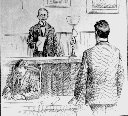
ON DECEMBER 10, 1906, NEARLY A WEEK AFTER HE WAS CONVICTED OF THE FIRST DEGREE MURDER OF GRACE BROWN, CHESTER GILLETTE ARRIVED IN THE COURTROOM OF THE HERKIMER COUNTY COURTHOUSE FOR THE LAST TIME AS THAT DAY WAS THE DAY THAT WOULD DECIDE THE REST OF HIS LIFE.

THE COUNTY CLERK CALLED CHESTER UP TO THE STAND AND ASKED HIM IF THERE WAS ANYTHING THAT HE WANTED TO SAY BEFORE SENTENCING. CHESTER REPLIED BY SAYING, "I DESIRE TO STATE THAT I AM INNOCENT OF THE CRIME AND THEREFORE OUGHT NOT TO BE PUNISHED. I THINK THAT IS ALL."

THE JUDGE, IRVING R. DEVENDORF, HAND-PICKED BY THE GOVERNOR OF THE STATE TO PRESIDE OVER THIS TRIAL, WAS FACED WITH HIS FIRST MURDER TRIAL AND THIS WAS THE FIRST TIME THAT HE HAD TO SEND A MAN TO THE ELECTRIC CHAIR. HE DID HAVE SOME HELP FROM THE LAW IN THAT AREA BECAUSE ONCE A MAN WAS CONVICTED OF FIRST-DEGREE MURDER IN THOSE DAYS, A DEATH SENTENCE WAS INEVITABLE. THEREFORE, REGARDLESS OF HIS OWN FEELINGS, HE HAD NO CHOICE BUT TO CONDEMN CHESTER TO DIE IN THE ELECTRIC CHAIR.

SEATED BEHIND CHESTER AND HIS DEFENSE ATTORNEYS WAS HIS MOTHER, LOUISA RICE GILLETTE. SHE HAD ARRIVED IN HERKIMER THE NIGHT BEFORE ON A TRAIN FROM DENVER, COLORADO, WHERE SHE AND HER FAMILY HAD BEEN LIVING SINCE LEAVING THE ZION CITY CULT THE YEAR BEFORE. SHE WAS THERE ON ASSIGNMENT FROM THE DENVER TIMES NEWSPAPER TO COVER THE SENTENCING. SHE SHOWED NO EMOTION WHEN THE FATEFUL SENTENCE WAS PRONOUNCED BECAUSE SHE HAD FAITH THAT THERE WOULD BE AN APPEAL THAT WOULD GRANT CHESTER A NEW TRIAL.

AS SOON AS SENTENCE WAS PRONOUNCED, CHESTER'S ATTORNEYS FILED THE APPEAL TO PREVENT THE PROPOSED EXECUTION DATE OF JANUARY 28, 1907. IT WAS ACCEPTED AND THE EXECUTION WAS POSTPONED UNTIL THE APPEALS WENT THROUGH THE COURTS.

HOWEVER, THE APPEALS PROCESS WAS VERY EXPENSIVE AND LOUISA FIGURED THAT SHE COULD RAISE MONEY AND PUBLIC SYMPATHY BY EMBARKING ON SPEAKING TOURS TO PROCLAIM HER SON'S INNOCENCE AND HELP HER RAISE MONEY SO THAT CHESTER COULD GET A NEWER AND FAIRER TRIAL. HER LECTURES BEGAN IN THE BEGINNING OF 1907. THROUGHOUT HER LECTURES, LOUISA PROCLAIMED HER SON WAS NOT GUILTY AND TREATED UNFAIRLY BY THE COURT. BUT SHE INFURIATED THE PUBLIC BY CRITICIZING GRACE BROWN IN FRONT OF PEOPLE WHO OTHERWISE WOULD HAVE SIDED WITH HER. SHE SAID THAT GRACE WAS TO BLAME FOR EVERYTHING BECAUSE SHE "TEMPTED" CHESTER INTO THE RELATIONSHIP AND SAID THAT IF IT WAS NOT FOR HER, CHESTER WOULD NOT BE IN AUBURN STATE PRISON AWAITING ELECTROCUTION.

DESPITE SOME LAST-MINUTE INTERVENTION FROM FORMER D.A. GEORGE WARD, BY THEN A COUNTY JUDGE, LOUISA'S LECTURES PROVED TO BE A FAILURE. SHE DID NOT RAISE ENOUGH MONEY AND PUBLIC OPINION WAS AGAINST HER. BUT STILL SHE WOULD NOT GIVE UP, NO MATTER HOW LONG IT TOOK. BUT THERE WASN'T REALLY ANYTHING SHE COULD DO IF SHE STAYED IN NEW YORK. AT CHESTER'S INSISTENCE, SHE BOARDED A TRAIN AND RETURNED TO DENVER TO BE WITH THE REST OF HER FAMILY TO WAIT FOR THE OUTCOME.

BUT NEW YORK STATE HAD NOT HEARD THE LAST OF LOUISA GILLETTE. SHE WOULD PLAY A BIGGER ROLE IN THE YEAR TO COME.

Wednesday, May 31, 2006


5/31/06- TRIAL OF THE CENTURY


PEOPLE FROM ALL AROUND THE COUNTRY POURED INTO THE LITTLE TOWN OF HERKIMER, N.Y. TO ATTEND THE TRIAL OF CHESTER GILLETTE FOR THE MURDER OF HIS PREGNANT LOVER, GRACE BROWN, WHICH BEGAN ON NOVEMBER 12, 1906 WITH A WEEK-LONG SEARCH FOR THE 12-MAN JURY THAT WOULD DECIDE HIS FATE. THE JURY WAS MADE UP OF TWELVE MEN WHO WERE ALL FROM HERKIMER COUNTY AND A MAJORITY OF THEM WERE FARMERS WHO COULD RELATE TO THE BROWN FAMILY. SOME OF THEM EVEN HAD DAUGHTERS THAT WERE CLOSE TO GRACE'S AGE. THE DISTRICT ATTORNEY, GEORGE WARD, DECIDED TO USE THIS TO HIS ADVANTAGE IF HE WAS GOING TO WIN THE CASE AND SEND CHESTER GILLETTE TO THE ELECTRIC CHAIR.

AFTER THE JURY WAS SELECTED, THE TRIAL BEGAN. WARD CALLED ALL OF HIS WITNESSES, INCLUDING MARJORIE CAREY, THE NEW JERSEY WOMAN WHO WAS AT BIG MOOSE LAKE ON THE DAY OF THE MURDER AND CLAIMED TO HAVE HEARD GRACE'S FINAL SCREAM. HE ALSO CALLED HARRIET BENEDICT, WHOM HE BELIEVED WAS THE OTHER GIRL IN THE RELATIONSHIP BETWEEN CHESTER AND GRACE. ALTHOUGH HARRIET ADMITTED THAT SHE WENT OUT WITH CHESTER TO LITTLE YORK LAKE ON THE FOURTH OF JULY, SHE SAID THAT THERE WERE NO ROMANTIC FEELINGS BETWEEN HER AND CHESTER. WARD'S SO-CALLED "STAR WITNESS" MAY HAVE PROVED TO BE A LETDOWN, BUT YEARS LATER, THEODORE DREISER WOULD IMMORTALIZE HER AS "THE OTHER WOMAN" IN HIS NOVEL, "AN AMERICAN TRAGEDY."

IN TRUTH, HIS REAL "STAR WITNESS" WAS ONE WHO WAS NOT ALIVE: GRACE BROWN HERSELF. IN OPEN COURT, WARD PROCEEDED TO READ GRACE'S LETTERS TO THE JURY AND SPECTATORS SO THEY COULD GET AN IMPRESSION OF WHAT GRACE WAS GOING THROUGH AND HER ATTEMPTS TO GET CHESTER TO MARRY HER AND THAT HE IGNORED HER. AS HE CONTINUED READING, EVERYONE IN THE COURTROOM STARTED CRYING. REPORTERS, JURYMEN, SPECTATORS, AND EVEN THE D.A. HIMSELF WAS CRYING.

HOWEVER, THERE WAS ONLY ONE PERSON WHO DID NOT SHOW ANY EMOTION WHATSOEVER. THAT WAS THE MAN TO WHOM THE LETTERS WERE ADDRESSED TO: CHESTER GILLETTE. HE SAT THERE, CHEWING HIS GUM, AND APPEARED TO BE BORED WITH THE WHOLE THING. THAT MOVE WOULD INFURIATE PEOPLE WHO MIGHT HAVE GIVEN HIM THE BENEFIT OF A DOUBT. THE PRESS CALLED HIM AN "UNREPENTANT AND MURDEROUS MONSTER" AND FROM THEIR REPORTS, THEY HAVE ALREADY CONVICTED HIM.

CHESTER'S DEFENSE ATTORNEYS, LED BY FORMER SENATOR ALBERT MILLS, PULLED OFF A VALIANT EFFORT, DESPITE NOT HAVING A VERY GOOD CASE. THEY WERE WELL BEHIND WARD AS FAR AS COLLECTING EVIDENCE WENT. PART OF THEIR CASE INVOLVED USING GRACE'S LETTERS AS EVIDENCE THAT SHE COMMITTED SUICIDE AT BIG MOOSE LAKE THAT DAY. THAT WAS THE STORY THAT CHESTER TOLD ON THE STAND. ASIDE FROM THAT, CHESTER WAS NOT CONSIDERED TO BE A VERY RELIABLE WITNESS, ESPECIALLY FOR SOMEONE WHO WAS SUPPOSED TO BE TRYING TO SAVE HIS OWN NECK. HE JUST DIDN'T CARE.

FINALLY ON DECEMBER 4, 1906, AFTER FOUR WEEKS OF THE MOST INTENSE COURTROOM DRAMA EVER SEEN FOR THAT ERA, THE JURY CAME BACK WITH ITS VERDICT AFTER ONLY FIVE HOURS OF DELIBERATION. THEY ANNOUNCED THAT CHESTER WAS GUILTY AS CHARGED OF FIRST-DEGREE MURDER. AFTER HEARING THAT, CHESTER WROTE A QUICK TELEGRAM TO HIS FATHER TELLING HIM, "DEAR FATHER, I AM CONVICTED."

WARD HAD WON. CHESTER'S TRIP TO THE ELECTRIC CHAIR WAS NOW VIRTUALLY GUARANTEED.

Thursday, May 25, 2006

5/25/06- Celebrity


On the evening of July 14, 1906, a train pulled into the station in the town of Herkimer, NY. Herkimer was the county seat of Herkimer County. There were huge crowds of people lined up at the station because one of its passengers was a young man who had been arrested for the first-degree murder of Grace Brown at Big Moose Lake.

As soon as the train stopped, Chester Gillette was led off the train by two men, one of them being Undersheriff Austin Klock and led to a waiting wagon. They then departed down a back road to avoid being mobbed on Main Street and arrived at the Herkimer County Jail where Chester would remain until he stood trial for murder, a crime which if convicted, meant that he would be executed in the electric chair.

That evening and even in the days that followed, the news of Chester's arrest and stay in the 1834 Jail spread like wildfire. People flocked from all around to see the young murderer in his cage. One of the spectators was Frank Brown, Grace's father who had just buried his daughter in South Otselic. Once he saw Chester, he moved to attack him and would have succeeded had Klock not intervened. Some reacted to him in that manner. However others had somewhat favorable opinions of him. Not surprisingly, many of those people were young women.

The district attorney, George Ward, started gathering evidence for his case against Chester with the intention that the evidence would send him to the chair. To date, he had obtained Grace's trunk from Old Forge where it was delivered the day she died. In the trunk were Chester's seven letters to her. He also obtained Grace's letters to him from his room in Cortland; Grace's autopsy report; a wrapped jar containing her unborn fetus; the hotel registers containing Chester's fake identities; and the boat which he requested the Glenmore Hotel to give to him to use as evidence. He was still missing some key pieces of evidence, including the tennis racket and Grace's final letter.

Three weeks after Chester's arrest, his landlady found Grace's final letter hidden beneath his collar rack and she had it mailed to Ward. The tennis racket was found a month later hidden under a log near Big Moose Road. It was believed that Chester had made a deal with Klock that if Chester told him where the racket was, he would receive better food and treatment. As a result of him giving up the location of the racket, he began receiving his meals from the local hotels and from the sheriff's wife.

For Chester, life in the 1834 Jail was like living in the Hilton. After all, his cell was basically a three-room suite. The main cell was his sitting room and exercise area. The left cell was his bedroom and the right cell was his walk-in closet.

At his arraignment, Chester was appointed two defense attorneys by the courts because he could not afford a lawyer and lawyers in Cortland declined to get involved, partly because of the reputation of Chester's rich uncle. As a result, the papers viewed this as though the Cortland Gillettes had officially abandoned Chester. The defense attorneys appointed for Chester were Albert Mills, a former state senator, and Charles Thomas, a prominent Herkimer lawyer. They were considered the best lawyers to defend Chester.

The only real problem facing the defense was timing. Since they were appointed only ten weeks before the trial, with a governor-appointed judge at Ward's recommendation, would take place. It was also an election year, as Ward was running for County Judge and any earlier date would conflict with his campaign. And Ward did not want the trial to start after his term as District Attorney had ended. Ultimately, they decided on mid-November to start the trial. So the only thing that the defense could do was to get their story ready for the trial, including a story that Grace committed suicide that day on Big Moose Lake and that Chester's failure to save her was an act of fear rather than premeditation.

The only question was, would it be enough to save Chester from being ensnared in the noose that Ward was already tightening around his neck?