
It's been so long since I've posted on here but I have decided to share a link to a story I did last year for my main website where I decided to revisit my experiences with the Chester Gillette case.
The story, which I have called "Chester, Grace and Me: Revisiting a Murder that Won't Die" can be found at this link: https://blackcatloner.com/2015/08/11/chester-grace-and-me-revisiting-a-murder-that-wont-die-2/
Showing posts with label grace brown. Show all posts
Showing posts with label grace brown. Show all posts
Tuesday, July 14, 2015


Sunday, March 30, 2008
3/30/08- 100 Years Ago... Today

"Monday Morning.
Went to bed at 12:30 and was asleep in a few minutes. Slept soundly until called at 3:45. Feel refreshed and calm. I am surprised that I can look at this matter so calmly. Had communion for the first time. I feel that I am fully prepared to go and meet Jesus. I shall watch for the others.
Was so glad when "Mac" told me that Paul had taken a stand for Christ. This makes me happier than anything else could have done. May the rest be comforted as I have been in these last moments.
Had a very nice little breakfast and appreciate everyone's kindness. They have all been so kind and courteous. I am very grateful to each one. Good morning All.
P.S. If it isn't any extra expense or too much trouble please have "Taps" played at the last.
'Gone to be with Jesus.'
Chester."
The following passage contained the last words that were written one hundred years ago today by Chester Ellsworth Gillette. He finished the entry just ten minutes before two guards arrived at his cell on Death Row at Auburn State Prison to lead him to the chamber that held the electric chair where he paid the ultimate price for the murder of Grace Brown nearly two years earlier.
Those words can still be read today in the recently published book, "The Prison Diary and Letters of Chester Gillette" by Craig Brandon and Jack Sherman. The diary book basically told the story of Chester's redemption as he acknowledged the pain he caused his family and friends because of his actions and begged for a chance to repay them for everything that they did for him.
It also describes how Chester was able to accept his fate so calmly, even though he remained blindly confident that some miraculous legal act would come into play and he would be granted a new trial and released. Even when he walked into the chamber and sat down in the chair, he was able to accept his fate with dignity.
Unlike the centennial commemorating Grace's death in 2006, the question here is, how do you commemorate an execution, even if is the execution of a murderer whose actions spawned a classic novel, two movies, and an opera? That's probably one question that is very hard to answer. Hopefully, he may finally have found the peace he was looking for.
Friday, January 11, 2008
1/11/08- Here's The Latest...

Well, here we are for another year on the Chester and Grace site and this year officially kicks off with the release of the latest Gillette book, "The Prison Diary and Letters of Chester Gillette," as written by Craig Brandon and Jack Sherman and it is based on the diary that Chester kept while awaiting his execution in Auburn Prison and also contains letters that he wrote to family members.
This book is significant from the previous Gillette books mainly because for the first time, we experience the case through Chester's own words and it depicts a Chester that die-hard Gillette buffs didn't know existed. Even though the diary did not contain a confession or an account of what happened to Grace on July 11, 1906 at Big Moose Lake, it does deal with Chester's transformation from a careless, thoughtless individual into a more mature young man who cared about the well-being of his family.
As you know last March, the diary, along with the letters were donated to Hamilton College and were added to its extensive Gillette trial collection that also includes Grace's letters. And also this year is significant because March 30 marks the 100th anniversary of Chester's execution in the electric chair for Grace's murder.
Hopefully this year will also be significant for the fact that my book will also be out. The book will mainly be another retelling of the whole case and contains some new material, including Grace's diary from 1902 and the events that came after the publication of Craig's first book, "Murder in the Adirondacks", including the centennial commemoration of Grace's death in 2006 and the book "A Northern Light". I still have six chapters left to complete but I am hoping to have them completed within the next two months or so.
So, anyway, here was the latest from the Gillette front.
Wednesday, September 19, 2007
9/19/07- New Developments

So far there hasn't really been much going on in the world of Chester and Grace but I haven't really been idle as far as they go. As I continue to write the book, I have received some new documents that pertain to Grace from her grandnephew, Robert Williams on July 11 of this year. Among the new pieces of information is a detailed account of Grace's ancestry that dates back to the Mayflower. This information will be in my book, which at press time is called The Murder That Will Never Die: The Murder of Grace Brown. I am still hoping to get the book done and out by the end of the year.
On August 25, almost a year to the day that I went down to Cortland and South Otselic, I finally went up to Big Moose Lake for a day trip. I went on a tour boat ride and went out to the scene where Grace was murdered and it was really lovely up there. The road up to the Adirondacks appeared to be virtually unchanged from when Chester and Grace went up there by train 101 years earlier. I wrote an account of my trip on my other site. And just for the record, I did not see Grace's ghost up at the lake, even though there is a photo of her on this page. The photo of Grace's ghost comes from the famous Unsolved Mysteries episode from 1996.
I am still waiting on several pieces of information but otherwise, as far as the book goes I am in pretty good shape.
Tuesday, June 26, 2007
6/27/07- A Place in the Sun- Movie Review

In 1951, Theodore Dreiser's classic novel, "An American Tragedy" was remade into a movie that was destined to become one of the greatest Hollywood movies ever made. The movie's name was "A Place in the Sun."
The movie, which was directed by legendary film director George Stevens served as a contemporary (by 1951 standards that is) retelling of Dreiser's novel as well as another retelling of the famous Chester Gillette murder case that happened 45 years before this movie was made.
The movie centers on a character named George Eastman (Montgomery Clift), a young drifter who is taken in by his rich uncle and given a job at his bathing suit factory in California (a scenery change from both the novel and the Gillette case, both in which took place in Central New York.) Although he pines for the beautiful Angela Vickers (played by Elizabeth Taylor), he soon falls for fellow co-worker Alice Tripp (Shelley Winters), in contrary to the factory's no-fraternization policy. All goes well for George until he finally meets and falls in love with Angela while at the same time, he learns that Alice is pregnant and demands that he marry her or else. Sound familiar?
From there, the movie more or less follows the story written by Dreiser and, to some extent, the Gillette case. After Alice threatens to tell all to his family, George brings her to a secluded lake with the intention to kill her, but like Clyde Griffiths in "An American Tragedy," he fails to go through with it.However that doesn't stop the boat from tipping over accidentally, killing Alice.
After several days of freedom with Angela and her family, George is arrested for murder and is forced to confront the fearsome district attorney (a pre-"Perry Mason" Raymond Burr) who is really intent on destroying George to further his own political ambitions. And of course if you've seen the movie and/or followed both the original story and Dreiser's novel, you can guess what happens after that.
I had seen the movie six times and I thought that it was pretty well done. The performances by Monty Clift as George (Chester) and Elizabeth Taylor as Angela (modeled after Harriet Benedict, one of Chester's rumored lovers) are so wonderful and so believable that you actually sympathize and care about them. Raymond Burr also gave a very powerful and convincing performance as the volatile district attorney. He was based on George Ward, the Herkimer County District Attorney who prosecuted Chester in 1906 despite the fact that the real Ward was nothing like the character in the film.
Shelley Winters was believable as Alice, the poor factory girl who was modeled after Chester's lover/victim Grace Brown. However, Alice's character follows the characterization of Roberta Alden (Grace in "An American Tragedy") and is portrayed as too whiny, too easy, and too unsympathetic, all of which the real Grace wasn't.
When the movie came out in 1951, legendary silent film star Charlie Chaplin called the film "the best film Hollywood ever made." It was a big hit and went on to win several Academy Awards including Best Director for George Stevens. Out of the four major stars of the film, Elizabeth Taylor is the only one who is still alive today. Shelley Winters died in January 2006.
Although the 1931 film is not yet available on DVD, this movie is available on DVD and can be found either at your local video store, local department stores or online at either Amazon.com or eBay.
Saturday, June 23, 2007
6/23/07- Fiction Becomes Fact

When acclaimed author Theodore Dreiser released his classic novel, An American Tragedy, no one could have predicted the overwhelming impact that the story had on the world, and no one would predict how it would alter the true story of the famous murder case upon which it was based.
The novel, based on the legendary Chester Gillette/Grace Brown murder case that occurred in 1906, was so effective that within a few years after its release, the novel slowly started to become confused with the actual facts of the case, especially in the areas where the story took place. Among the facts that were taken from the novel were the fact that Grace and her family were poor; that Chester killed Grace so that he could marry a rich girl; and that there was only one "other girl" in the Chester/Grace triangle instead of several. And that other girl in the novel's eyes was none other than Harriet Benedict.
In truth, Harriet had only gone out with Chester a few times. But the New York City papers (with the exception of the Times) blew everything out of proportion by saying that the relationship between the two was a full-fledged romance and wrote articles saying that they were engaged to be married and that she sneaked into Chester's jail cell during the trial and so on. Seeing potential in those articles, Dreiser took it a step further and turned the Chester/Harriet relationship into a full-fledged romantic relationship so that way readers could sympathize with them better than they could sympathize with Grace, especially after Chester was convicted of murder.
Harriet, who married a Cortland lawyer sometime after Chester's execution in 1908 and gave birth to a son who became a World War II hero, was never able to shake the notoriety that Chester's trial and Dreiser's novel had imposed on her.
In 1931, Paramount Pictures released the feature film version of Dreiser's masterpiece. It was released at a time when movies were coming out of the silent film era and it was notable for the fact that it was one of the first "talkies" to be released into theaters. When it debuted at the Liberty Theater in Herkimer, some of the surviving trial participants such as Judge Irving R. Devendorf and retired sheriff Austin Klock came out to see the film. The lobby also had some of the trial artifacts including Grace's letters and the tennis racket (the murder weapon), on display. It would be the last time the tennis racket would be seen in public until last year when it was on display during the "Chester, Grace, and Dreiser" conference at Herkimer County Community College. It was and still is in the custody of an person who wished to remain anonymous.
However, the film would not go without some controversy. Dreiser unsuccessfully sued the film's director, Johann von Sternberg for plagiarism and tried to have the film's release blocked. However, Dreiser's case was thrown out, but that would not be the only legal block that the movie would face.
In Chenango County (Grace's home county), its residents did not receive the film warmly, especially since it portrayed the Browns in a bad light. Grace's mother Minerva Brown, by then a 73-year-old widow, promptly sued Paramount for libel and defamation of character. The trial was originally held in Norwich, the county seat of Chenango County, but it was later relocated to Ithaca because the defendants felt that the jury would side with Mrs. Brown. Fearing that Minerva would not survive the civil trial, the studio settled out of court for an undisclosed sum that was probably close to a few thousand dollars.
Despite the controversy, the movie was a success and during the 30's, the novel also led to a play called "The Trial of Clyde Griffiths." In the program which explained the origins of the novel and of the Gillette case, it was clear that fiction was actually becoming fact. In fact, local Adirondack legend Roy Higby, the boy who found Grace's body in Big Moose Lake, wrote his account of the case in his memoir, "A Man From the Past." Although his account of finding Grace's body was accurate, the rest of his version of the Gillette case was Dreiser's story. And it would take another 60 years for the truth to finally come out.
But before that could happen, twenty years later, another movie by Paramount would be released. It too would be based on Dreiser's novel and on the Gillette case. But this one would end up being considered one of the greatest movies of all time.
The movie's name? "A Place in the Sun."
Tuesday, June 12, 2007
6/12/07- Grace's Song

As you know already, Grace Brown got her nickname "Billy" from a song called "Won't You Come Home, Bill Bailey." Well today I just happened to come across the lyrics to that song on Google and I have just added it to my ever-growing collection of links on this site if anyone is interested in viewing them.
I just learned that the song was originally published in 1902 by Hughie Cannon (1877-1912). Grace was about 16 at the time so she could not have heard that song any earlier than that. At any rate, the song must have stuck with her because as a result of family and friends listening to her sing that tune, she was given the nickname "Billy."
In a way, I can see why she liked the song so much. I had the privilege of listening to an earlier recording of the song on a recently released Gillette documentary called "An American Murder," currently available at the Herkimer County Historical Society. It does have a really jazzy beat which you can dance to and it definitely fit the times. In Grace's time, ragtime music was all the rage. Over the years, the song had been recorded countless times by different artists, including Louis Armstrong, Patsy Cline, Bobby Darin, Ella Fitzgerald, and most recently by Harry Connick, Jr. His version can be found on his latest CD, "Oh, My Nola." If you have a chance, check it out.
Source: Wikipedia Encyclopedia.- http://en.wikipedia.org.
Thursday, May 24, 2007
5/24/07- Creating An American Tragedy
By 1923, author Theodore Dreiser was very hard at work on a novel that he hoped would become his crowning achievement. It was novel about a man who was torn between two women from completely different worlds and while in pursuit of the American Dream, he commits an unforgivable act. He was calling the book, based on the real-life murder of Grace Brown by Chester Gillette at Big Moose Lake in 1906, "An American Tragedy."
To prepare for his novel, Dreiser obtained a copy of the trial transcript; went on a road trip to view the sites where the story took place, including the murder scene at Big Moose Lake. He also viewed Grace's love letter, which by then were in the possession of the family of District Attorney George Ward, who died in the Spanish Flu Epidemic of 1918. He also went through some of the old New York City paper articles that dated back to the trial which he had saved.
In order to make the novel fictional, he basically changed whatever he could about the events and the locations of the original case. For starters, he changed the Gillette Skirt Factory into a shirt collar factory and he changed the city and the location from Cortland to an area of Central New York that he named "Lycurgus." On a map, it would be near the real-life factory town of Canajoharie. He also changed the name of all of the key players and places that figured into the Gillette story. For example: Big Moose Lake became known as Big Bittern Lake and it was located near the Canadian border. The town where Chester (or Clyde Griffiths as he is known in the novel) was tried in was changed from Herkimer to Bridgeburg and the county name was changed from Herkimer to Cataraqui County.
Dreiser even changed Chester's background a little bit by stating that Clyde originally hailed from Kansas City and most of the events that happened to Clyde in the first part of the novel were based more on Dreiser's upbringing rather than Chester's. However, Dreiser retained the excessively-religious environment that both Chester and Dreiser were brought up in. He also made Grace (renamed Roberta Alden in the book) into a poor farm girl from a poor, unkempt family farm, a far cry from the real Grace's family who were actually middle-class people and very well thought of. Then he turned Ward (renamed Orville Mason) into the main villain of the story, a district attorney who was a raving lunatic looking to send a man to the electric chair to serve his political ends. Ward, although he was elected Herkimer County Judge a week before Chester's trial started, was not like that.
And yet there were some things that Dreiser retained from the Gillette story. In the novel, he used Grace's letters almost word for word; he used Chester's final statement that was written before his execution in 1908 exactly word for word save for Clyde's signature at the end; he kept Auburn as the prison where Clyde was executed even though by the time the novel was published, state executions were only carried out at Sing Sing Prison in Ossining, NY; and using the city papers as a base, he created a love triangle with a rich girl. At the trial, the press made a big deal out of Chester's relationship with Harriet Benedict, the daughter of a prominent Cortland lawyer, even though the true nature of their relationship was strictly based on being merely friendly acquaintances.
It took Dreiser nearly two years to get his book ready for publication and by the end of 1925, he finally unveiled "An American Tragedy" to the world. It was written in three parts and it was well over 800 pages long, about the length of a Harry Potter book. Still the general public bought the book and it became a major sensation.
In Central New York, the novel's release put Chester and Grace back in the news again, especially in Herkimer County. Just prior to Dreiser's novel, the case had been all but forgotten and seemed on the verge of fading into local legend. After Dreiser's novel was released and even a few years afterward, people began to take Dreiser's word as gospel as to what actually happened at Big Moose Lake in 1906 and it would take years before the real story began to filter back to the surface.
But for now, Dreiser finally had his masterpiece and a famous murder case finally achieved legendary status.
To prepare for his novel, Dreiser obtained a copy of the trial transcript; went on a road trip to view the sites where the story took place, including the murder scene at Big Moose Lake. He also viewed Grace's love letter, which by then were in the possession of the family of District Attorney George Ward, who died in the Spanish Flu Epidemic of 1918. He also went through some of the old New York City paper articles that dated back to the trial which he had saved.
In order to make the novel fictional, he basically changed whatever he could about the events and the locations of the original case. For starters, he changed the Gillette Skirt Factory into a shirt collar factory and he changed the city and the location from Cortland to an area of Central New York that he named "Lycurgus." On a map, it would be near the real-life factory town of Canajoharie. He also changed the name of all of the key players and places that figured into the Gillette story. For example: Big Moose Lake became known as Big Bittern Lake and it was located near the Canadian border. The town where Chester (or Clyde Griffiths as he is known in the novel) was tried in was changed from Herkimer to Bridgeburg and the county name was changed from Herkimer to Cataraqui County.
Dreiser even changed Chester's background a little bit by stating that Clyde originally hailed from Kansas City and most of the events that happened to Clyde in the first part of the novel were based more on Dreiser's upbringing rather than Chester's. However, Dreiser retained the excessively-religious environment that both Chester and Dreiser were brought up in. He also made Grace (renamed Roberta Alden in the book) into a poor farm girl from a poor, unkempt family farm, a far cry from the real Grace's family who were actually middle-class people and very well thought of. Then he turned Ward (renamed Orville Mason) into the main villain of the story, a district attorney who was a raving lunatic looking to send a man to the electric chair to serve his political ends. Ward, although he was elected Herkimer County Judge a week before Chester's trial started, was not like that.
And yet there were some things that Dreiser retained from the Gillette story. In the novel, he used Grace's letters almost word for word; he used Chester's final statement that was written before his execution in 1908 exactly word for word save for Clyde's signature at the end; he kept Auburn as the prison where Clyde was executed even though by the time the novel was published, state executions were only carried out at Sing Sing Prison in Ossining, NY; and using the city papers as a base, he created a love triangle with a rich girl. At the trial, the press made a big deal out of Chester's relationship with Harriet Benedict, the daughter of a prominent Cortland lawyer, even though the true nature of their relationship was strictly based on being merely friendly acquaintances.
It took Dreiser nearly two years to get his book ready for publication and by the end of 1925, he finally unveiled "An American Tragedy" to the world. It was written in three parts and it was well over 800 pages long, about the length of a Harry Potter book. Still the general public bought the book and it became a major sensation.
In Central New York, the novel's release put Chester and Grace back in the news again, especially in Herkimer County. Just prior to Dreiser's novel, the case had been all but forgotten and seemed on the verge of fading into local legend. After Dreiser's novel was released and even a few years afterward, people began to take Dreiser's word as gospel as to what actually happened at Big Moose Lake in 1906 and it would take years before the real story began to filter back to the surface.
But for now, Dreiser finally had his masterpiece and a famous murder case finally achieved legendary status.
Wednesday, May 02, 2007
5/2/07- Man With A Vision

In 1906, the Chester Gillette murder trial captured the imagination of people all across the nation. It was the topic of conversation among many people at that time to the point where the story of the young man who murdered his pregnant girlfriend in the Adirondacks overshadowed the other major murder trial that was occurring at the same time: The Harry Thaw case.
Among those who were entranced by the story was a 35-year-old novelist and magazine editor named Theodore Dreiser. He became interested in the case because he was looking for a certain type of crime that reflected the dark side of the pursuit of the American Dream to put into his next novel. He had researched dozens of murder cases before deciding that he was going to use the Gillette Case as the basis for the novel.
Dreiser was born in 1871 in Indiana. Like Chester, Dreiser came from an excessively- religious family and clearly had the same feelings for young women, especially upper-class women, that Chester had. He wrote many short stories before publishing his first novel "Sister Carrie" in 1900. It was pretty much a cutting-edge novel for its era and caused quite a bit of controversy because of the sexual content that was in its pages. It took years for the book to sell partly because of the changing attitudes of the era.
By 1920, after writing several other books, Dreiser was ready to create what was going to be his great masterpiece. He decided that he was going to base his novel on the Gillette case and he was going to call the novel "An American Tragedy." He viewed Chester as a "Horatio Alger gone wrong" character and realized that he and Chester shared a similar background which was essential in the creation of the main character, Clyde Griffiths.
In the novel, Clyde is forced to choose between his poor pregnant factory girlfriend, who was modeled after Chester's lover/victim Grace Brown, and a society girl, who was modeled after one of Chester's upper-class girlfriends, Harriet Benedict. In the book, Clyde planned to kill his poor girlfriend so he could marry his rich girlfriend. At the last minute, he chickened out and the poor girlfriend's death ended up being an accident and he simply did not save her. However, Clyde was still charged with murder and executed in the electric chair.
To prepare for his novel, Dreiser requested a copy of the trial transcript and researched clippings from the New York Sun, which was one of the "yellow journal" papers that covered the trial. Then in 1923, he and then-mistress Helen Richardson took a road trip to tour the sites that related to the case, including Grace's home in South Otselic; the sites in Cortland where Chester and Grace met and worked; Herkimer where the trial took place; and Big Moose Lake where the murder took place.
During their trip to Big Moose Lake, Dreiser and Helen rented a rowboat at the Glenmore Hotel where Chester and Grace also rented their boat and went out on the lake. When they approached the murder scene, Helen noticed that Dreiser had a strange look on his face and she suddenly became frightened. She had a feeling that Dreiser was going to kill her and put that in his book. However, at that moment, she realized that she had cast herself as Grace in that moment.
Also during their tour, they stopped off at the home of District Attorney George Ward, who lived in Dolgeville. Ward had died a few years earlier during the Spanish Flu Epidemic of 1918. His daughter allowed him to view Grace's letters which he kept after the trial and he later put the letters into his novel almost word for word.
When he returned from his tour, Dreiser began taking what he had learned about the case and molded it into what he hoped would be the greatest novel he ever wrote. It would be another two years before it would be published, but when it was published it would become one of the greatest classic novels of all time and it would turn the Gillette case into an immortal legend.
Monday, April 16, 2007
4/16/07- The Press vs. Gillette

In 1906, the murder of Grace Brown at Big Moose Lake and the eventual trial of her lover Chester Gillette captivated not only people in the area where she was murdered, but the news of her death made national headlines all across the nation. In fact, one of the biggest key factors in the conviction of Chester was the way he was portrayed by the press.
The trial attracted reporters from all over the nation, including reporters from the New York City papers. In those days, the city papers were notorious for their "yellow journalism" style of reporting, meaning that they had the tendency to make up news to sell papers. If people read the local papers (the Utica, Herkimer and Syracuse papers) during the trial, they got the actual truth of what went on at the trial. On the other hand, the city papers went to considerable lengths to get the story, even if they had to make the news themselves.
Among some of the things that the city reporters "reported" on were stories that Chester tried to escape from the courtroom when he was actually trying to give undersheriff Austin Klock his hat; that he had a secret girlfriend who sent him letters and candy which was revealed to be from his younger sister Lucille; that one of his rich girlfriends from Cortland was let into his jail cell; that he was trying to commit suicide; and so on.
Also, frustrated that they could not obtain an actual photo of Grace because the few known pictures of her were being used by the local papers and by the district attorney, the reporters paid off a Herkimer waitress to pose as Grace. The photo first appeared in the New York Journal, one of the yellow journalism papers. As you can tell, the photo looks nothing like her.

But perhaps the most notorious thing that they did to get the story was when they dressed up in old clothes and masks and went over to the Herkimer County Jail and demanded that Chester be handed over to them so they could hang him themselves. After they were chased away by the jailers, they dressed back up in their reporter clothes, went back to the jail and asked the jailers about whether or not a lynch mob came by and threatened Chester's life. After the jailers confirmed it, they went back to their hotel and sure enough, their "lynch mob" story appeared on the front page of the New York Journal the next day.
After the trial ended, Judge Irving R. Devendorf, who was not happy with the way the city papers handled the trial and especially after they insulted both him and the people of Herkimer, issued warrants for one of the yellow journal papers and sent the deputies down to the city to arrest three people connected with that paper. Among those arrested was the legendary Western hero Bat Masterson, who worked at the paper as a sports reporter but had covered the Gillette case for the city papers. They were shipped up to Herkimer and fined fifty dollars each.
The trial was over, but the press' lingering effect lived on and it would soon become source material for an author who became interested in the case and needed a case like the Gillette case for a novel that he hoped would be his "great masterpiece."
His name? Theodore Dreiser.
Thursday, March 08, 2007
3/8/07- Chester's Diary

A new chapter in the saga of Chester Gillette and Grace Brown was opened on Tuesday, March 6 with the donation of Chester's diary to Hamilton College's Burke Library by a descendant of Chester's.
The diary was written during the last six and a half months of Chester's life while he was in Auburn Prison awaiting execution by electric chair and ever since after the execution in 1908, the diary was in the possession of the family of Chester's sister, Hazel Gillette McWade (1887-1975)for generations before it was passed down to Hazel's granddaughter, Marlynn McWade-Murray of Tallahassee, Florida. After conducting an Internet search for her great-uncle and realizing the importance of the diary, she got in touch with Craig Brandon, author of "Murder in the Adirondacks" and "Grace Brown's Love Letters." Craig then put her in touch with Randall Ericson, the librarian at Hamilton College and they agreed that the diary should be donated to the library's vast Gillette collection that included District Attorney George Ward's court documents, old newspaper clippings and of course, Grace's love letters.
In the diary, we are introduce to a very different Chester as opposed to the Chester we know from previous historical accounts. The Chester in the diary is more mature, more spiritual and more concerned for his family's future after his death. This was a far cry from the Chester Gillette that was portrayed in the trial transcript, the press, and history.
In short, the diary is the story of Chester's redemption.
As I sat in the audience listening to the presentation and listening to the passages read from the diary, including his last entry that was written just minutes before he was led to the electric chair, I too was surprised by the new interpretation of Chester. It made me step back and reevaluate what I have learned about him during the year and a half that I have been involved with the story of Chester and Grace.
The only things that the diary does not contain is a confession that many expected Chester to write, nor does it offer an account of what happened to Grace at Big Moose Lake on July 11, 1906. However, he does mention Grace only once in a passage where he admitted that he was never in love with her. Other than that, the diary is more about his transition from boy to man as he waited for his death.
I did meet Marlynn before I left the presentation. She is a very nice person and I saw a little bit of her grandmother in her. From what I have learned about her grandmother, who was 19 at the time of the murder in 1906, she was a really strong young woman considering what she had to deal with. And while my heart is still with Grace, Hazel was someone to be admired.
And so was Chester.
Friday, February 02, 2007
2/2/07- New And Improved

Hello, everyone. I would like to welcome everyone to the new and improved "Chester and Grace" blog site. I apologize for the fact that it took me so long to get everything ready, but there was a reason for that and I would now like to share that with you.
During my down time, I was finally able to teach myself a new trick: How to set up links. As you can see on the link bar on the right side of the blog, I have added a whole bunch of links that relate to both the Gillette case and me in general. I am sure that you will like them.
The first link I added are all the blogs I have posted on my primary blog site, "Ultimate Blackcatloner," on Yahoo 360 that is exclusively devoted to Chester and Grace. The second link is a link to my entire blog site, the above-mentioned "Ultimate Blackcatloner" on Yahoo. I put that link there so that way, viewers of this site can see my other written work on other subjects that relate more to me. Tomorrow is the one-year anniversary of the day that I officially opened that site and became an Internet blogger.
Another link I have set up is a link to my Chester and Grace photo page on Yahoo Photos. Most of those photos are photos that I took while others are either submitted by various sources or uploaded off the Internet. That is followed by my blog, "A Valentine to Grace," my "ghost-written response" to her love letters that I wrote last year on the Yahoo site about a month after I received a copy of the final letter.
I also have a link to a transcription of Grace's diary that was provided by her grand-nephew Robert Williams, who has been of significant help to me while I am writing my book on the case as well as a link to the other official site devoted to the Gillette case: Craig Brandon's "Murder in the Adirondacks" site and the Utica Observer-Dispatch Gillette feature site entitled "The Murder That Will Never Die: An American tragedy." That site contains some written articles about the case, as well as a slideshow containing photos of the case and an audio reading of Grace's final letter.
And while I am on the topic of my book on Grace, I just want to say that things are going pretty well. I am writing the book at the Herkimer County Historical Society on a non-Internet connected computer. I am usually there about four days a week at an average of four hours a day. I have received a couple of recommendations as to where I can get the book published, but I am going to wait until I have a full manuscript before I submit it. I am keeping my fingers crossed in high hopes that I will make my target date of 2008 for when I get the book published.
And as far as this site goes, I am planning to keep it open at least until I get the book published. I may not be on here as much being that the Gillette Centennial year is over with, but that doesn't mean that I don't have anything else on tap for this site. I still have to tell the aftermath story and how the case became Theodore Dreiser's novel, "An American Tragedy." I may also provide updates from time to time on any new developments in both the case and on my upcoming book.
Friday, December 15, 2006

12/16/06- AT YEAR'S END
SINCE WE ARE RAPIDLY APPROACHING THE END OF 2006, OTHERWISE KNOWN AS "THE YEAR OF THE AMERICAN TRAGEDY," I FIGURED THAT NOW WOULD BE THE BEST TIME TO ANSWER THE MILLION-DOLLAR QUESTION THAT HAS PROBABLY BEEN ON EVERYONE'S MIND: "HOW DID I GET INVOLVED WITH THE GILLETTE CASE?"
WELL, I GUESS NOW WOULD BE THE APPROPRIATE TIME TO ANSWER THAT QUESTION.
IT ALL STARTED IN THE BREAKROOM AT WAL-MART IN HERKIMER WHERE I WORK IN JULY OF 2005. THAT NIGHT, I NOTICED A COPY OF THE HERKIMER EVENING TELEGRAM THAT WAS DATED JULY 12, 2005. ON THE FRONT PAGE OF THAT ARTICLE, I READ AN ARTICLE ABOUT THE FIRST REPORTS ABOUT THE CENTENNIAL. I WAS ABLE TO CLIP IT OUT BEFORE IT WAS THROWN AWAY AND I STILL HAVE IT TO THIS DAY. THAT IN TURN PROMPTED ME TO GO TO THE LIBRARY AND TOOK OUT JOSEPH BROWNELL'S BOOK, "ADIRONDACK TRAGEDY." I READ THAT THROUGHOUT THE COURSE OF THREE WEEKS AND THEN CRAIG BRANDON'S BOOK, "MURDER IN THE ADIRONDACKS" WAS AVAILABLE FOR ME TO TAKE OUT AND SO I HAD THAT ONE OUT FOR SIX WEEKS. I NOW OWN COPIES OF BOTH BOOKS.
WHILE I HAD "MURDER IN THE ADIRONDACKS" OUT, I BEGAN TAKING NOTES ON THE CASE FROM THERE BECAUSE THE INFORMATION THERE WAS VERY ACCURATE. AND THEN TAKING NOTES OUT OF THE BOOK SOON LED TO AN OBSESSIVE PRINTING OF WHATEVER INFORMATION ABOUT THE CASE THAT I COULD GET OFF THE INTERNET. AND I GOTTA TELL YOU, YAHOO AND GOOGLE HAS A VERY EXTENSIVE LINE OF ARTICLES THAT RELATED TO THE GILLETTE CASE. EVENTUALLY, I SET UP MY EMAIL ADDRESS AT THE LIBRARY SO THAT WAY I COULD CONTINUE MY RESEARCH ON THE CASE.
BY JANUARY, 2006, I WAS A MEMBER OF THE AMERICAN TRAGEDY CENTENNIAL COMMITTEE, AN ORGANIZATION THAT WAS MADE UP OF THE HERKIMER COUNTY HISTORICAL SOCIETY, THE ILION LITTLE THEATER CLUB, AND THE GRACE COMMITTEE, AN ORGANIZATION FROM THE TOWN OF WEBB. AT MY FIRST MEETING, I RECEIVED A COPY OF GRACE'S LAST LETTER AS SHE WROTE IT AS WELL AS GETTING MY PHOTO (UNINTENTIONALLY, OF COURSE) ON THE FRONT PAGE OF THE TELEGRAM.
SHORTLY AFTER THAT, I DISCOVERED THE JOYS OF INTERNET BLOGGING WHEN I SET UP A BLOG SITE ON YAHOO AND I HAD WRITTEN SOME BLOGS ON THE CASE ON THAT SITE, INCLUDING MY LITTLE "VALENTINE" TO GRACE. FINALLY, WHEN I FELT THAT I HAD PUT UP QUITE A BIT OF BLOGS ABOUT THE GILLETTE CASE ON MY YAHOO SITE AND THE FACT THAT I HAD A LOT OF INFORMATION FROM BOTH THE BOOKS AND THE INTERNET, I DECIDED TO OPEN THIS SITE HERE ON BLOGGER.COM.
AT THE SAME TIME, I ATTENDED THE MANY EVENTS THAT THE CENTENNIAL YEAR HAD TO OFFER, INCLUDING THE HERKIMER PERFORMANCES OF THE TRIAL REENACTMENTS; THE BUS TRIP TO CORTLAND AND SOUTH OTSELIC THAT RELATED TO THE GILLETTE CASE, INCLUDING GRACE'S HOME AND GRAVESITE; THE ILION LITTLE THEATER'S PERFORMANCE OF THE PLAY, "CHESTER AND GRACE;" AND I ALSO ATTENDED THE RECENT HISTORIC MARKER DEDICATION FOR THE 1834 JAIL IN HERKIMER.
HOWEVER, I WAS UNABLE TO ATTEND THE MEMORIAL FOR GRACE UP AT BIG MOOSE LAKE ON JULY 11. I HAD TO WORK THAT NIGHT AND THERE WAS NO WAY THAT I COULD GET THE DAY OFF TO GO UP THERE. HOWEVER, TO LET GRACE KNOW THAT I DIDN'T FORGET HER, I ARRANGED TO HAVE FLOWERS SENT UP TO THE MEMORIAL TO BE PUT IN THE LAKE ALONG WITH THE MEMORIAL WREATH THAT WAS EVENTUALLY PUT IN THE LAKE BY FRANK CAREY, THE GRANDSON OF MARJORIE CAREY, THE WOMAN WHO HEARD GRACE SCREAM THE DAY SHE WAS MURDERED, AS WELL AS ROBERT WILLIAMS, GRACE'S GRANDNEPHEW, WHOM I HAVE BEEN IN CONTACT WITH RECENTLY AND I WILL EXPLAIN THAT LATER, AND SUSAN WILLIAMS, GRACE'S GRANDNIECE. I WAS TOLD THAT IT WAS A WONDERFUL CEREMONY. ALTHOUGH MY FLOWERS DIDN'T GO IN THAT DAY, I WAS TOLD THAT THEY WENT IN TWO DAYS LATER IN A PRIVATE CEREMONY.
I HAVE MET A LOT OF PEOPLE DURING MY INVOLVEMENT WITH THE CASE AND I HAVE OBTAINED NUMEROUS PIECES OF INFORMATION ABOUT THE CASE, MOST NOTABLY IN THE LAST FOUR MONTHS ALONE. I HAD JUST RECENTLY COMPLETED FOUR MONTHS OF GOING THROUGH CRAIG BRANDON'S RESEARCH FILES, WHICH ARE AVAILABLE AT THE HERKIMER COUNTY HISTORICAL SOCIETY. DURING THAT TIME, I MET A WOMAN WHO WAS RESEARCHING THE ROXALANA DRUSE CASE FOR A SERIES OF GHOST NOVELS ABOUT THAT CASE AND SHE GAVE ME EVERY SINGLE LEGAL DOCUMENT ABOUT THE CASE, INCLUDING THE TRIAL TRANSCRIPT. THEN ON THIS SITE, I ESTABLISHED CONTACT WITH A WOMAN FROM HOUSTON, TX. WHO HAS SENT ME PHOTOS FROM THE CASE, AS WELL AS THE GRACE EPISODE OF "UNSOLVED MYSTERIES," THE MOVIE SCRIPT FROM THE 1931 MOVIE, "AN AMERICAN TRAGEDY," AND GRACE'S AUTOPSY REPORT. I HAVE EVEN MET BOTH CRAIG BRANDON AND JOE BROWNELL.
THEN WHO WOULD'VE THOUGHT THAT IN ONLY A YEAR AND A HALF OF RESEARCH, I WOULD BE WRITING A BOOK ABOUT THE CASE, MUCH LESS ONE THAT FOCUSES EXCLUSIVELY ON GRACE, SINCE SO LITTLE IS KNOWN ABOUT HER OUTSIDE OF THE LOVE LETTERS AND HER STORY WITH CHESTER. I CAN'T BELIEVE THAT THIS IS MOVING CLOSER TO REALITY. I HAVE BEEN TRYING TO START A WRITING CAREER FOR YEARS AND NOW IT LOOKS LIKE IT IS GETTING CLOSER TO ACTUALLY HAPPENING.
AND SO, NOW HERE IS THE PART WHERE I LIST SOME OF THE PEOPLE WHO HAVE HELPED ME AND SUPPORTED ME THROUGHOUT THE COURSE OF MY WORK ON THE CASE TO DATE AND EXTEND MY DEEPEST GRATITUDE FOR THEIR SUPPORT:
TO CRAIG BRANDON AND JOSEPH BROWNELL: THANK YOU FOR WRITING THE TWO BOOKS THAT HAVE INSPIRED ME TO CREATE BOTH THIS SITE AND MY UPCOMING BOOK. I HOPE THEY WILL BE ABLE TO CONTINUE TO SUPPORT ME AND OFFER ASSISTANCE AS I CONTINUE TO WRITE THE BOOK.
TO MARY BOARDWAY OF HOUSTON, TX., WHO WAS AMONG THE FIRST TO COMMENT ON THIS SITE: THANK YOU FOR SENDING ME THE PHOTOS, THE "UNSOLVED MYSTERIES" EPISODE, AND THE AUTOPSY REPORT. THANKS AGAIN FOR YOUR SUPPORT.
TO SUSAN SCHWAGER OF COLONIE, N.Y.: THANK YOU FOR GIVING ME THE LEGAL DOCUMENTS THAT PERTAINED TO THE CASE AND I WISH YOU LUCK WITH YOUR ROXY DRUSE BOOK.
TO JACK SHERMAN: THANK YOU FOR PUTTING ON SUCH A GOOD SHOW WITH THE REENACTMENTS THIS PAST SUMMER.
TO THE GRACE COMMITTEE IN TOWN OF WEBB: THANK YOU FOR ALLOWING ME TO BE A PART OF THIS HISTORIC EVENT AND I HOPE THAT I WILL BE ABLE TO GO UP TO BIG MOOSE LAKE, HOPEFULLY NEXT YEAR.
TO ROBERT WILLIAMS, GRACE'S GRAND-NEPHEW: THANK YOU FOR YOUR ASSISTANCE IN HELPING ME GET READY TO WRITE MY BOOK ABOUT YOUR GREAT-AUNT. I PROMISE I WILL REMEMBER YOU WHEN I DO GET THE BOOK PUBLISHED.
TO JEFF STEELE, SUE PERKINS, AND CARYL HOPSON OF THE HERKIMER COUNTY HISTORICAL SOCIETY: THANK YOU FOR ALLOWING ME TO BE A PART OF THE CENTENNIAL COMMITTEE AND FOR YOUR SUPPORT WITH MY RESEARCH ON THE CASE FOR THIS SITE AS WELL AS MY BOOK AND I HOPE THAT I CAN BE OF FURTHER ASSISTANCE WITH ANY OTHER EVENTS THAT YOU HAVE PLANNED.
TO THE MEMBERS OF THE ILION LITTLE THEATER CLUB: THANK YOU FOR PUTTING ON SUCH A GOOD SHOW WITH BOTH THE TRIAL REENACTMENTS AND "CHESTER AND GRACE." I'M SORRY THAT I WASN'T ABLE TO SEE "MY DEAR CHESTER," BUT I DO HOPE THAT I WILL BE ABLE TO COME TO MORE OF YOUR SHOWS NEXT YEAR.
TO JENNIFER SCHANTZ: THANK YOU FOR THE FINAL LETTER; FOR DELIVERING GRACE'S FLOWERS TO BIG MOOSE FOR ME AT THE MEMORIAL WHEN I COULDN'T BE THERE MYSELF TO DELIVER THEM; FOR A VERY INSPIRED PERFORMANCE AS GRACE IN "CHESTER AND GRACE;" AND FOR REALLY INTRODUCING ME TO GRACE BROWN. I WISH YOU WELL WITH EVERYTHING IN THE FUTURE.
TO MY FAMILY: THANK YOU FOR YOUR SUPPORT OF ME WITH MY CONTINUED WORK WITH THE CASE. I LOVE YOU ALL.
TO ALL OF THE PEOPLE WHO HAVE VIEWED THE SITE AND HAVE OFFERED COMMENTS AND/OR SUPPORT TO ME: THANK YOU SO MUCH FOR YOUR SUPPORT AND BECAUSE OF THIS, IT CAN BE ASSURED THAT CHESTER AND GRACE'S STORY WILL CONTINUE INTO THE 21ST CENTURY. ONCE AGAIN, I THANK YOU SO MUCH.
AND LAST, BUT CERTAINLY NOT LEAST, I WOULD LIKE TO THANK GRACE BROWN HERSELF FOR LEAVING BEHIND A LEGACY THAT HAS BEEN PASSED DOWN FROM GENERATION TO GENERATION. YOU GAVE ME THE SIGN I NEEDED TO START MY WRITING CAREER AND FOR THAT I AM ETERNALLY GRATEFUL TO YOU. I JUST WANT TO THANK YOU FOR EVERYTHING AND I HOPE THAT I WILL BE ABLE TO GET YOUR STORY OUT TO THE PUBLIC. MAY YOU CONTINUE TO REST IN PEACE.
AND SO, I MUST BRING THE SITE TO A CLOSE FOR 2006 SO THAT WAY I CAN GET IT UPDATED AND SET FOR NEXT YEAR, BEING THAT THE CENTENNIAL YEAR IS OVER, BUT AS I SAID, I WILL CONTINUE TO KEEP THE SITE OPEN BECAUSE THERE IS STILL SO MUCH THAT I NEED TO TELL, AS WELL AS THE FACT THAT THERE IS ALWAYS THE POSSIBILITY OF NEW INFORMATION THAT COULD POP UP AT ANY TIME.
SEE YOU NEXT YEAR.
Saturday, November 25, 2006

11/25/06- A GOOD YEAR
WELL, THE AMERICAN TRAGEDY CENTENNIAL YEAR IS OVER AT LAST. LAST SATURDAY, I ATTENDED THE DEDICATION CEREMONY OF A HISTORICAL MARKER FOR THE 1834 HERKIMER COUNTY JAIL IN HERKIMER. THE CEREMONY WAS SUPPOSED TO MARK THE 100th ANNIVERSARY OF THE START OF CHESTER GILLETTE'S HISTORIC MURDER TRIAL FOR THE MURDER OF GRACE BROWN. THE MARKER WAS DONATED BY THE FAMILY OF HERKIMER COUNTY SHERIFF CHRIS FARBER. IN THE PHOTO ABOVE, I AM STANDING TO THE RIGHT OF THE MARKER, ALONG WITH JEFF STEELE, PRESIDENT OF THE HERKIMER COUNTY HISTORICAL SOCIETY AND CRAIG BRANDON, AUTHOR OF "MURDER IN THE ADIRONDACKS" AND "GRACE BROWN'S LOVE LETTERS." SHERIFF FARBER AND HIS FAMILY ARE TO THE LEFT OF THE MARKER.
IN ADDITION TO CHESTER, THE 1834 JAIL ALSO HOUSED TWO OF HERKIMER COUNTY'S MOST INFAMOUS MURDERERS, BOTH OF WHOM I HAVE ALSO BEEN LEARNING ABOUT THROUGHOUT MY TIME RESEARCHING THE GILLETTE CASE: ROXALANA DRUSE, WHOSE HANGING IN 1887 PAVED THE WAY FOR THE ELECTRIC CHAIR; AND JEAN GIANINI, WHO WAS ACCUSED OF THE FIRST SCHOOLTEACHER MURDER IN AMERICAN HISTORY WHEN HE MURDERED HIS TEACHER IN POLAND IN 1914. THERE IS A BOOK ABOUT THE GIANINI TRIAL NOW ON SALE AT THE HERKIMER COUNTY HISTORICAL SOCIETY: "LULLABY FOR MORONS," BY RONALD KEITH SIEGEL. I HAVE READ THAT BOOK AND I THOUGHT THAT IT WAS REALLY INTERESTING. IF YOU ARE IN THE AREA AND HAPPEN TO SEE THE BOOK THERE, I RECOMMEND IT TO ANYONE WHO IS INTERESTED IN OLD MURDER CASES.
DESPITE THE COLD WEATHER, THERE WAS A PRETTY GOOD TURNOUT FOR THE CEREMONY. FOLLOWING THE CEREMONY, TOURS OF BOTH THE JAIL AND THE COURTHOUSE ACROSS THE STREET WERE GIVEN, AS WELL AS A RECEPTION IN THE HISTORICAL SOCIETY BUILDING. CRAIG WAS ALSO ON HAND FOR A BOOK SIGNING, AS WAS JOSEPH BROWNELL, AUTHOR OF "ADIRONDACK TRAGEDY." MEMBERS OF THE ILION LITTLE THEATER CLUB WERE ALSO PRESENT, DRESSED UP AS PEOPLE THAT FIGURED PROMINENTLY IN THE GILLETTE CASE, AND I CONTRIBUTED MY 8 X 10 PHOTO OF GRACE, AS WELL AS A PHOTO ALBUM CONTAINING ALL OF MY GILLETTE PHOTOS TO DATE, AND THE RUBBING I MADE OF GRACE'S GRAVE WHEN I WENT TO HER GRAVESITE IN AUGUST.
ALTHOUGH I MET JOE BROWNELL IN AUGUST ON THE BUS TRIP, THIS DAY WAS THE FIRST TIME I MET CRAIG BRANDON. IT WAS A REAL HONOR FOR ME TO MEET THE LEADING EXPERT ON THE CASE AND TO STAND UP THERE WITH HIM AT THE MARKER DEDICATION CEREMONY. IT IS MOMENTS LIKE THIS THAT DEEPEN MY COMMITTMENT TO THE CASE, ESPECIALLY SINCE AFTER ALL, I AM DOING A BOOK ON THE CASE.
THE YEAR MAY BE OVER FOR THE AMERICAN TRAGEDY CENTENNIAL COMMITTEE, BUT IT IS NOT OVER FOR ME. IT MAY NEVER BE OVER FOR ME. LIKE I SAID, I AM DOING A BOOK ON THE CASE, AND I MAY AS WELL GIVE YOU AN UPDATE AS TO THE DIRECTION I WANT TO GO WITH IT. MY NEW PLAN IS TO FOCUS MORE EXCLUSIVELY ON GRACE, ESPECIALLY SINCE SO LITTLE IS KNOWN ABOUT HER, OUTSIDE OF THE LOVE LETTERS AND CHESTER. I BASICALLY WANT TO SHOW THE READERS THAT THERE WAS MORE TO GRACE THAN JUST THE LETTERS. I WILL ALSO INCLUDE THE UPDATES THAT HAVE EMERGED FROM THE CASE SINCE THE TWO BOOKS WERE PUBLISHED TWENTY YEARS AGO. IF ALL GOES WELL, I SHOULD BE GOOD TO GO BY THE END OF THE YEAR AND I AM HOPING TO GET THE BOOK OUT BY 2008, THE 100th ANNIVERSARY OF CHESTER'S EXECUTION.
I SHALL NEVER FORGET MY INVOLVEMENT IN THIS CASE OR THE PEOPLE I HAVE WORKED WITH FOR AS LONG AS I LIVE. WHEN I FIRST STUMBLED UPON THAT NEWSPAPER CLIPPING IN JULY, 2005, I THOUGHT THAT IT WAS AN ACCIDENT. NOW I REALIZED THAT IT WAS FATE THAT LED ME TO THE CASE. NOW I HAVE TO MAKE SURE THAT IN THE END, I WILL HAVE DONE RIGHT BY EVERYONE AND EVERYTHING THAT THE CASE STOOD FOR.
Tuesday, November 07, 2006
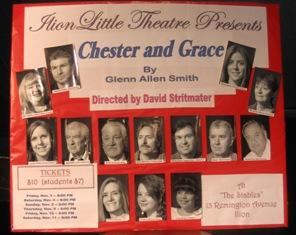
11/7/06- CHESTER AND GRACE (PLAY REVIEW)
OF ALL THE EVENTS SURROUNDING THE CENTENNIAL OF GRACE BROWN'S TRAGIC MURDER AT BIG MOOSE LAKE THAT OCCURRED OVER THE COURSE OF THIS YEAR, NONE HAS BEEN AS EAGERLY ANTICIPATED AS THE ILION LITTLE THEATER'S REVIVAL OF THEIR PLAY, CHESTER AND GRACE, A PLAY THAT WAS ORIGINALLY WRITTEN BY GLEN ALLEN SMITH AND WAS ORIGINALLY PERFORMED BY THE CORTLAND REPERTORY THEATER. THE ILION LITTLE THEATER ORIGINALLY PERFORMED THE PLAY IN 1999 AND AGAIN IN 2001, AND SINCE THIS YEAR MARKED THE ANNIVERSARY OF GRACE'S DEATH, THIS REVIVAL COULD NOT HAVE COME AT A BETTER TIME.
I ATTENDED THE OPENING NIGHT PERFORMANCE LAST FRIDAY NIGHT AND I WAS REALLY IMPRESSED WITH THE WHOLE PLAY. THAT NIGHT ALSO WAS MY FIRST TIME IN THE STABLES THEATER, WHERE THE PLAY WAS HELD. I HAD LIVED IN ILION THREE YEARS AGO, BUT I HAD NO IDEA THAT I LIVED RIGHT DOWN THE ROAD FROM THE THEATER UNTIL THE FIRST REENACTMENT PERFORMANCE BECAUSE I USED TO LIVE NEAR THE REMINGTON ARMS WHEN I LIVED IN ILION BEFORE I MOVED TO HERKIMER AND BEFORE I LEARNED ABOUT THE GILLETTE CASE.
ANYWAY, BACK TO THE REVIEW. I COULD NOT HAVE THOUGHT OF ANYTHING BETTER TO DO THAT WEEKEND THAN TO GO TO SEE THIS PLAY. THIS PLAY WAS PERHAPS THE BEST PLAY THAT I HAVE SEEN AND PROBABLY WILL EVER SEE IN MY LIFE. WORDS CANNOT DESCRIBE THIS EXPERIENCE. I WISH THAT I COULD HAVE GONE TO HIGH SCHOOL PLAYS AT LEAST HALF AS GOOD AS THIS.
BASICALLY, I WAS VERY IMPRESSED WITH THE ACTING. MOST OF THE ORIGINAL CAST MEMBERS FROM THE 1999 PLAY RETURNED FOR THE REVIVAL, INCLUDING JENNIFER SCHANTZ (GRACE) AND ART WILKS (AUSTIN KLOCK, WHO WAS IN THIS SUMMER'S "THE PEOPLE VS. GILLETTE"), BOTH WHOM I HAVE SERVED ON THE CENTENNIAL COMMITTEE WITH.
AS FAR AS THE PREVIOUS INCARNATIONS OF GRACE ON STAGE AND SCREEN GOES, THERE IS NO TOPPING JENNIFER'S PERFORMANCE. SHE BROUGHT OUT GRACE'S TRUE CHARACTER ON THAT STAGE SUCCESSFULLY. SHE ALSO HAD A LOT OF THE MOST POWERFUL AND HEARTBREAKING SCENES IN THE PLAY, INCLUDING A MOMENT IN THE PLAY WHERE GRACE KNEELS ON THE STAGE, CRYING AND HOLDING A WRAPPED JAR, AS WELL AS SCENES WHERE CHESTER (PLAYED BY JACK CARNEY) IS TRYING TO GET HER TO GET RID OF THEIR BABY. I WAS IMPRESSED WITH HOW AUTHENTIC AND REALISTIC THOSE SCENES WERE WRITTEN.
ONE THING THAT I'VE GOTTA SAY ABOUT JACK'S INTERPERTATION OF CHESTER IS THAT NOT ONLY DID HE LOOK THE PART, BUT HE ALSO HAD CHESTER'S PERSONALITY DOWN PAT: THE "BAD BOY" AS OPPOSED TO GRACE'S "GOOD GIRL" IMAGE. HIS SCENES WITH HIS MOTHER (PLAYED BY COLLEEN SCHULTS) WERE ALSO PRETTY WELL WRITTEN, AS ARE HIS SCENES WITH D.A. WARD (PLAYED HERE BY BOB DeCARLO) AND DEFENSE ATTORNEY MILLS (JOHN CAMPONERA). I ALSO THOUGHT THE TUG-OF-WAR SCENE OVER THE TENNIS RACKET WAS REALLY FUNNY TOO.
IN ADDITION TO THE TWO LEADS, THERE WERE SOME OTHER STAND-OUT PERFORMANCES, INCLUDING OF COURSE, ART WILKS, AGAIN PLAYING KLOCK WITH THE SAME HUMOR AND WIT THAT WE SAW IN THE PEOPLE VS. GILLETTE THIS PAST SUMMER. THERE WAS ALSO A STAND-OUT PERFORMANCE FROM RISING-STAR EMMA HEMPLE, WHOSE CHARACTER, LUCILLE GILLETTE (CHESTER'S YOUNGER SISTER) SEEMS TO ENJOY THE LIMELIGHT AT HER BROTHER'S EXPENSE.
THE PLAY ALSO CONTAINS THE SONG "ENTREATING," WRITTEN IN 1907 AND BASED ON GRACE'S LOVE LETTERS. THAT SONG IS PERFORMED BY THE CAST AT THE OPENING OF ACT 2. THE FOLK SONG, "THE BALLAD OF CHESTER AND GRACE," IS ALSO PERFORMED IN VARIOUS SPOTS DURING THE SHOW BY THE PLAY'S NARRATORS, KNOWN AS THE "THREE C'S," WHO ALSO FUNCTION AS MUSES IN VARIOUS SCENES. ALSO, LISTEN FOR THE SONG, "WON'T YOU COME HOME, BILL BAILEY?," WHICH IS KNOWN AS THE SONG THAT EARNED GRACE HER NICKNAME, "BILLY."
THE PLAY'S DIRECTOR, DAVID STRITMATER, WHO ALSO DIRECTED THE 1999 PRODUCTION, DID AN EXCELLENT JOB WITH THIS PRODUCTION. IT IS DEFINITELY WORTH THE PRICE OF ADMISSION. IF YOU HAVE NOT BEEN TO ANY OF THE EVENTS OF THIS PAST SUMMER AND ARE INTERESTED IN THE STORY OF CHESTER AND GRACE, YOU MUST NOT MISS THIS SHOW.
THE NEXT PERFORMANCES OF CHESTER AND GRACE ARE SCHEDULED FOR THURSDAY, NOVEMBER 9; FRIDAY, NOVEMBER 10; AND SATURDAY, NOVEMBER 11 AT 8 P.M. AT THE STABLES THEATER IN ILION.
OF ALL THE EVENTS SURROUNDING THE CENTENNIAL OF GRACE BROWN'S TRAGIC MURDER AT BIG MOOSE LAKE THAT OCCURRED OVER THE COURSE OF THIS YEAR, NONE HAS BEEN AS EAGERLY ANTICIPATED AS THE ILION LITTLE THEATER'S REVIVAL OF THEIR PLAY, CHESTER AND GRACE, A PLAY THAT WAS ORIGINALLY WRITTEN BY GLEN ALLEN SMITH AND WAS ORIGINALLY PERFORMED BY THE CORTLAND REPERTORY THEATER. THE ILION LITTLE THEATER ORIGINALLY PERFORMED THE PLAY IN 1999 AND AGAIN IN 2001, AND SINCE THIS YEAR MARKED THE ANNIVERSARY OF GRACE'S DEATH, THIS REVIVAL COULD NOT HAVE COME AT A BETTER TIME.
I ATTENDED THE OPENING NIGHT PERFORMANCE LAST FRIDAY NIGHT AND I WAS REALLY IMPRESSED WITH THE WHOLE PLAY. THAT NIGHT ALSO WAS MY FIRST TIME IN THE STABLES THEATER, WHERE THE PLAY WAS HELD. I HAD LIVED IN ILION THREE YEARS AGO, BUT I HAD NO IDEA THAT I LIVED RIGHT DOWN THE ROAD FROM THE THEATER UNTIL THE FIRST REENACTMENT PERFORMANCE BECAUSE I USED TO LIVE NEAR THE REMINGTON ARMS WHEN I LIVED IN ILION BEFORE I MOVED TO HERKIMER AND BEFORE I LEARNED ABOUT THE GILLETTE CASE.
ANYWAY, BACK TO THE REVIEW. I COULD NOT HAVE THOUGHT OF ANYTHING BETTER TO DO THAT WEEKEND THAN TO GO TO SEE THIS PLAY. THIS PLAY WAS PERHAPS THE BEST PLAY THAT I HAVE SEEN AND PROBABLY WILL EVER SEE IN MY LIFE. WORDS CANNOT DESCRIBE THIS EXPERIENCE. I WISH THAT I COULD HAVE GONE TO HIGH SCHOOL PLAYS AT LEAST HALF AS GOOD AS THIS.
BASICALLY, I WAS VERY IMPRESSED WITH THE ACTING. MOST OF THE ORIGINAL CAST MEMBERS FROM THE 1999 PLAY RETURNED FOR THE REVIVAL, INCLUDING JENNIFER SCHANTZ (GRACE) AND ART WILKS (AUSTIN KLOCK, WHO WAS IN THIS SUMMER'S "THE PEOPLE VS. GILLETTE"), BOTH WHOM I HAVE SERVED ON THE CENTENNIAL COMMITTEE WITH.
AS FAR AS THE PREVIOUS INCARNATIONS OF GRACE ON STAGE AND SCREEN GOES, THERE IS NO TOPPING JENNIFER'S PERFORMANCE. SHE BROUGHT OUT GRACE'S TRUE CHARACTER ON THAT STAGE SUCCESSFULLY. SHE ALSO HAD A LOT OF THE MOST POWERFUL AND HEARTBREAKING SCENES IN THE PLAY, INCLUDING A MOMENT IN THE PLAY WHERE GRACE KNEELS ON THE STAGE, CRYING AND HOLDING A WRAPPED JAR, AS WELL AS SCENES WHERE CHESTER (PLAYED BY JACK CARNEY) IS TRYING TO GET HER TO GET RID OF THEIR BABY. I WAS IMPRESSED WITH HOW AUTHENTIC AND REALISTIC THOSE SCENES WERE WRITTEN.
ONE THING THAT I'VE GOTTA SAY ABOUT JACK'S INTERPERTATION OF CHESTER IS THAT NOT ONLY DID HE LOOK THE PART, BUT HE ALSO HAD CHESTER'S PERSONALITY DOWN PAT: THE "BAD BOY" AS OPPOSED TO GRACE'S "GOOD GIRL" IMAGE. HIS SCENES WITH HIS MOTHER (PLAYED BY COLLEEN SCHULTS) WERE ALSO PRETTY WELL WRITTEN, AS ARE HIS SCENES WITH D.A. WARD (PLAYED HERE BY BOB DeCARLO) AND DEFENSE ATTORNEY MILLS (JOHN CAMPONERA). I ALSO THOUGHT THE TUG-OF-WAR SCENE OVER THE TENNIS RACKET WAS REALLY FUNNY TOO.
IN ADDITION TO THE TWO LEADS, THERE WERE SOME OTHER STAND-OUT PERFORMANCES, INCLUDING OF COURSE, ART WILKS, AGAIN PLAYING KLOCK WITH THE SAME HUMOR AND WIT THAT WE SAW IN THE PEOPLE VS. GILLETTE THIS PAST SUMMER. THERE WAS ALSO A STAND-OUT PERFORMANCE FROM RISING-STAR EMMA HEMPLE, WHOSE CHARACTER, LUCILLE GILLETTE (CHESTER'S YOUNGER SISTER) SEEMS TO ENJOY THE LIMELIGHT AT HER BROTHER'S EXPENSE.
THE PLAY ALSO CONTAINS THE SONG "ENTREATING," WRITTEN IN 1907 AND BASED ON GRACE'S LOVE LETTERS. THAT SONG IS PERFORMED BY THE CAST AT THE OPENING OF ACT 2. THE FOLK SONG, "THE BALLAD OF CHESTER AND GRACE," IS ALSO PERFORMED IN VARIOUS SPOTS DURING THE SHOW BY THE PLAY'S NARRATORS, KNOWN AS THE "THREE C'S," WHO ALSO FUNCTION AS MUSES IN VARIOUS SCENES. ALSO, LISTEN FOR THE SONG, "WON'T YOU COME HOME, BILL BAILEY?," WHICH IS KNOWN AS THE SONG THAT EARNED GRACE HER NICKNAME, "BILLY."
THE PLAY'S DIRECTOR, DAVID STRITMATER, WHO ALSO DIRECTED THE 1999 PRODUCTION, DID AN EXCELLENT JOB WITH THIS PRODUCTION. IT IS DEFINITELY WORTH THE PRICE OF ADMISSION. IF YOU HAVE NOT BEEN TO ANY OF THE EVENTS OF THIS PAST SUMMER AND ARE INTERESTED IN THE STORY OF CHESTER AND GRACE, YOU MUST NOT MISS THIS SHOW.
THE NEXT PERFORMANCES OF CHESTER AND GRACE ARE SCHEDULED FOR THURSDAY, NOVEMBER 9; FRIDAY, NOVEMBER 10; AND SATURDAY, NOVEMBER 11 AT 8 P.M. AT THE STABLES THEATER IN ILION.
Friday, October 27, 2006
10/27/06- Ghosts
Since this is the time of year for stories about ghosts and haunted places, I figured that I would tell a little ghost tale today. Ghosts have more commonly been associated with historic events including wars, disasters, and of course murder cases. So it is only natural that ghost stories have emerged about the Gillette case.
For years after the famous murder of Grace Brown at Big Moose Lake in 1906 and the trial and execution of Chester Gillette in 1908, ghost stories have emerged about the case in locations that related to the case, including the courthouse and the 1834 Jail in Herkimer as well as Big Moose Lake itself.
The Gillette-related ghost stories started as early as 1909 and it also tied in with the sudden disappearance of the boat where the murder took place. It had been sitting in the courthouse since the trial ended and suddenly it was gone. One of the stories that surrounded the disappearance of the boat is that one day, people claimed to have seen ghostly images of a man and a woman in the boat and suddenly the ghostly man attacked the woman, who let out a loud shriek. Then they disappeared. Whether or not people had seen a ghostly reenactment of the murder remains a mystery.
And of course you all have heard the story of Grace's ghost at Big Moose Lake, right? It is one of the most famous ghost stories in New York State history. Over the years, people who have gone to Big Moose Lake have claimed to have experienced some unusual activity and sometimes claimed to have seen an image of a young woman in Victorian-era garb floating around the lake. Many have experienced a really strong feeling of sadness from the spirit, as though the ghost was mourning the circumstances that led to her death.
The most famous encounter was in 1988 when two women claimed to have seen Grace's ghost. That encounter led to a segment of the TV show "Unsolved Mysteries" that aired in January 1996.
Even today, the ghost stories of the Gillette case capture the imagination of the public as much as the love letters, Theodore Dreiser's "An American Tragedy," and the film "A Place in the Sun" have done. It keeps people guessing and it is always open to speculation. People believe what they want and it is always interesting, especially since this is Halloween season after all.
Oooooooooh...
For years after the famous murder of Grace Brown at Big Moose Lake in 1906 and the trial and execution of Chester Gillette in 1908, ghost stories have emerged about the case in locations that related to the case, including the courthouse and the 1834 Jail in Herkimer as well as Big Moose Lake itself.
The Gillette-related ghost stories started as early as 1909 and it also tied in with the sudden disappearance of the boat where the murder took place. It had been sitting in the courthouse since the trial ended and suddenly it was gone. One of the stories that surrounded the disappearance of the boat is that one day, people claimed to have seen ghostly images of a man and a woman in the boat and suddenly the ghostly man attacked the woman, who let out a loud shriek. Then they disappeared. Whether or not people had seen a ghostly reenactment of the murder remains a mystery.
And of course you all have heard the story of Grace's ghost at Big Moose Lake, right? It is one of the most famous ghost stories in New York State history. Over the years, people who have gone to Big Moose Lake have claimed to have experienced some unusual activity and sometimes claimed to have seen an image of a young woman in Victorian-era garb floating around the lake. Many have experienced a really strong feeling of sadness from the spirit, as though the ghost was mourning the circumstances that led to her death.
The most famous encounter was in 1988 when two women claimed to have seen Grace's ghost. That encounter led to a segment of the TV show "Unsolved Mysteries" that aired in January 1996.
Even today, the ghost stories of the Gillette case capture the imagination of the public as much as the love letters, Theodore Dreiser's "An American Tragedy," and the film "A Place in the Sun" have done. It keeps people guessing and it is always open to speculation. People believe what they want and it is always interesting, especially since this is Halloween season after all.
Oooooooooh...
Wednesday, September 06, 2006
9/6/06- Announcements
I figured that I would take the opportunity to make a couple of announcements today in regards to this site and to the year of the Gillette centennial.
First off, it has been five months since I started this site on Blogger and the feedback that I have received in regards to it have been largely positive. I would like to take the opportunity to thank everyone who has viewed the site for their praise and their comments. I do have more on tap in the coming months as I have stated before so stay tuned. This site is open to the public so all comments are welcome.
In other Gillette-related news, I received word the other day that the summer events in regards to the centennial have been very successful in terms of tourism and profitability. Of course now there is a three-month hiatus until the next event: The Ilion Little Theater Club's play "Chester and Grace," as well as a dedication ceremony where a historic marker will be placed at the 1834 Jail where Chester stayed during his trial.
However, my work on the case is not done yet. I am now entering my fourth week of research because now I am developing a non-fiction book on the case.That's right, you heard it here first folks. I am writing a book. The book will basically cover the whole case and how it became Theodore Dreiser's novel, "An American Tragedy." There will also be some additional things, including the opera, Jennifer Donnelly's novel, "A Northern Light," the events of the centennial year, and so much more. I will post more on it from time to time.
So anyway, that is all the reporting I have to do now. I just wanted to take the opportunity to thank everyone for the support they gave me throughout the course of the whole year since I have been involved with the case and I hope that I can continue to be on the case for some time to come.
First off, it has been five months since I started this site on Blogger and the feedback that I have received in regards to it have been largely positive. I would like to take the opportunity to thank everyone who has viewed the site for their praise and their comments. I do have more on tap in the coming months as I have stated before so stay tuned. This site is open to the public so all comments are welcome.
In other Gillette-related news, I received word the other day that the summer events in regards to the centennial have been very successful in terms of tourism and profitability. Of course now there is a three-month hiatus until the next event: The Ilion Little Theater Club's play "Chester and Grace," as well as a dedication ceremony where a historic marker will be placed at the 1834 Jail where Chester stayed during his trial.
However, my work on the case is not done yet. I am now entering my fourth week of research because now I am developing a non-fiction book on the case.That's right, you heard it here first folks. I am writing a book. The book will basically cover the whole case and how it became Theodore Dreiser's novel, "An American Tragedy." There will also be some additional things, including the opera, Jennifer Donnelly's novel, "A Northern Light," the events of the centennial year, and so much more. I will post more on it from time to time.
So anyway, that is all the reporting I have to do now. I just wanted to take the opportunity to thank everyone for the support they gave me throughout the course of the whole year since I have been involved with the case and I hope that I can continue to be on the case for some time to come.
Wednesday, August 30, 2006
8/30/06- We Meet At Last

Last weekend, I had the pleasure of going on a bus trip that was sponsored by the Herkimer County Historical Society to the sites in Cortland and South Otselic, NY that related to the Gillette Murder Case. It was another major event in the American Tragedy Centennial Year and it is the last one for the next three months until the Ilion Little Theater Club begins the performance run of "Chester and Grace" and the unveiling of the historic marker in front of the 1834 Jail on November 18.
And as you can see, I finally did meet Grace Brown. In a manner of speaking, of course.
Our first stop was to the Cortland County Historical Society where we met Joseph Brownell, the author of "Adirondack Tragedy. " I did get a chance to meet him, got his autograph, and told him about this site. He was very nice and he really knew a lot about the case, most notably about Grace. I learned a lot from him.
After the lecture at the Historical Society, the director came with us on a driving tour of the sites in Cortland. We drove past Grace's boarding house as well as her sister Ada Hawley's house where she stayed when she first arrived in Cortland in late 1904. We also went past Chester's boarding house and the former Gillette Skirt Factory building, which has been a furniture and appliance store for years. I got some good shots of the building. We did not go in the building, but I guess that will be for another time.
After lunch, we drove through DeRuyter, where Chester and Grace caught the train for their trip to the Adirondacks, and arrived at Grace's home in South Otselic, now owned by Robert and Diane Timm. The road that leads up to the farm has since been renamed "Grace Brown Lane" in honor of the house's former occupant. The view from the farm house was the same as I remember from the "Murder in the Adirondacks" book and the house itself was beautiful, despite the fact that the house was being remodeled at the time.
While I was at the house, I started feeling Grace's presence, especially when I passed one of the apple trees on the property. I remembered a photo in "Murder in the Adirondacks" in which a 16-year-old Grace was standing in front of an apple tree. At that point, it all started coming back to me that I was on sacred ground.
Finally we arrived at Valley View Cemetery, located right in town. We had to ascend a flight of moss-covered stairs and walked through the cemetery until we finally got to the Brown family plot and sure enough, there she was. I was actually at the grave that I had only seen in photos before this trip.
We also saw Ada Hawley's grave, which was directly across from Grace's family. We also saw the graves of her best friend/teacher Maude Crumb as well as the grave of her husband, Dr. J. Mott Crumb who represented the Brown family as a witness to Chester's execution in 1908.
Then while the rest of the group went to a peach festival that the town invited us to, I spent an extra twenty minutes or so with Grace in the cemetery. I took a rubbing of the grave that took up about ten minutes or so. I also talked to her a little bit and I may have even cried a little. I guess that once you get to know someone (even someone who's been dead for 100 years), they become a part of you. And I have gotten to know Grace quite well over the course of a year. Of course what was said will remain between myself and Grace.
Before I left, I laid down the flowers that I bought for her before I caught the bus. This time, I delivered them myself and I took a couple more photos of the grave before I said goodbye to her. Hopefully, I will go back there someday and see her again.
All in all, the trip was a bit of a soul-searching experience for me, not to mention that it will be very helpful in finding information so that I can start my book. As a result of everything that has happened, I now believe that me finding out about this case was not an accident. It was fate that led me to the Gillette case and it looks like I am here to stay for the time being.


Tuesday, August 22, 2006
8/22/06- Summer of '06

As the year of the Gillette Centennial begins to wind down, let me bring you up to speed as to what has happened during the course of the last few weeks.
On July 21, there was another performance of the Ilion Little Theater production, "The People vs. Gillette" at the very same Herkimer County Courthouse where nearly 100 years earlier (the trial happened in November), Chester Gillette was on trial for his life for the murder of Grace Brown. There were some differences at the courthouse performance, such as the addition of the jury box, not present at the Herkimer County Community College performances. Herkimer County Sheriff Chris Farber served as the jury foreman and delivered the guilty verdict to the actor playing Chester Gillette.

There was also another performance at HCCC the night after the courthouse performance and again I attended. I ended up getting autographs from both the cast and crew of the reenactments. They did a really wonderful job and I was glad to be a part of this major piece of history.
This Saturday, I will be going on the bus trip that is being sponsored by the Herkimer County Historical Society that will take me to Cortland and South Otselic that relate to the case, including Grace's house and grave site. In addition to photos, I will be taking a rubbing of her grave. I can't wait.
I also have a lot of things on tap here that will be coming up in the coming months, including the "Dreiser Story," as well as various other things that pertain to the case that will eventually lead up to the Ilion Little Theater Club's upcoming production "Chester and Grace." The year of the American Tragedy is not over yet.
Subscribe to:
Posts (Atom)

 Posts
Posts


