Showing posts with label Big Moose Lake. Show all posts

Wednesday, September 19, 2007

9/19/07- New Developments


So far there hasn't really been much going on in the world of Chester and Grace but I haven't really been idle as far as they go. As I continue to write the book, I have received some new documents that pertain to Grace from her grandnephew, Robert Williams on July 11 of this year. Among the new pieces of information is a detailed account of Grace's ancestry that dates back to the Mayflower. This information will be in my book, which at press time is called The Murder That Will Never Die: The Murder of Grace Brown. I am still hoping to get the book done and out by the end of the year.

On August 25, almost a year to the day that I went down to Cortland and South Otselic, I finally went up to Big Moose Lake for a day trip. I went on a tour boat ride and went out to the scene where Grace was murdered and it was really lovely up there. The road up to the Adirondacks appeared to be virtually unchanged from when Chester and Grace went up there by train 101 years earlier. I wrote an account of my trip on my other site. And just for the record, I did not see Grace's ghost up at the lake, even though there is a photo of her on this page. The photo of Grace's ghost comes from the famous Unsolved Mysteries episode from 1996.

I am still waiting on several pieces of information but otherwise, as far as the book goes I am in pretty good shape.

Wednesday, May 02, 2007

5/2/07- Man With A Vision


In 1906, the Chester Gillette murder trial captured the imagination of people all across the nation. It was the topic of conversation among many people at that time to the point where the story of the young man who murdered his pregnant girlfriend in the Adirondacks overshadowed the other major murder trial that was occurring at the same time: The Harry Thaw case.

Among those who were entranced by the story was a 35-year-old novelist and magazine editor named Theodore Dreiser. He became interested in the case because he was looking for a certain type of crime that reflected the dark side of the pursuit of the American Dream to put into his next novel. He had researched dozens of murder cases before deciding that he was going to use the Gillette Case as the basis for the novel.

Dreiser was born in 1871 in Indiana. Like Chester, Dreiser came from an excessively- religious family and clearly had the same feelings for young women, especially upper-class women, that Chester had. He wrote many short stories before publishing his first novel "Sister Carrie" in 1900. It was pretty much a cutting-edge novel for its era and caused quite a bit of controversy because of the sexual content that was in its pages. It took years for the book to sell partly because of the changing attitudes of the era.

By 1920, after writing several other books, Dreiser was ready to create what was going to be his great masterpiece. He decided that he was going to base his novel on the Gillette case and he was going to call the novel "An American Tragedy." He viewed Chester as a "Horatio Alger gone wrong" character and realized that he and Chester shared a similar background which was essential in the creation of the main character, Clyde Griffiths.

In the novel, Clyde is forced to choose between his poor pregnant factory girlfriend, who was modeled after Chester's lover/victim Grace Brown, and a society girl, who was modeled after one of Chester's upper-class girlfriends, Harriet Benedict. In the book, Clyde planned to kill his poor girlfriend so he could marry his rich girlfriend. At the last minute, he chickened out and the poor girlfriend's death ended up being an accident and he simply did not save her. However, Clyde was still charged with murder and executed in the electric chair.

To prepare for his novel, Dreiser requested a copy of the trial transcript and researched clippings from the New York Sun, which was one of the "yellow journal" papers that covered the trial. Then in 1923, he and then-mistress Helen Richardson took a road trip to tour the sites that related to the case, including Grace's home in South Otselic; the sites in Cortland where Chester and Grace met and worked; Herkimer where the trial took place; and Big Moose Lake where the murder took place.

During their trip to Big Moose Lake, Dreiser and Helen rented a rowboat at the Glenmore Hotel where Chester and Grace also rented their boat and went out on the lake. When they approached the murder scene, Helen noticed that Dreiser had a strange look on his face and she suddenly became frightened. She had a feeling that Dreiser was going to kill her and put that in his book. However, at that moment, she realized that she had cast herself as Grace in that moment.

Also during their tour, they stopped off at the home of District Attorney George Ward, who lived in Dolgeville. Ward had died a few years earlier during the Spanish Flu Epidemic of 1918. His daughter allowed him to view Grace's letters which he kept after the trial and he later put the letters into his novel almost word for word.

When he returned from his tour, Dreiser began taking what he had learned about the case and molded it into what he hoped would be the greatest novel he ever wrote. It would be another two years before it would be published, but when it was published it would become one of the greatest classic novels of all time and it would turn the Gillette case into an immortal legend.

Saturday, July 15, 2006

7/15/06- In Loving Memory


It has been a very trying week with the memorial for Grace Brown happening this past Tuesday at Big Moose Lake in the Adirondacks. About 200 people witnessed the memorial wreath being placed in the lake that day, including descendants of Grace herself. Unfortunately, I was not one of them. Due to work commitments, I could not attend and I was very devastated about that. As I mentioned in my last blog, I made arrangements to have a dozen red roses sent up to the lake, along with a brief message to Grace.

In addition to posting my last entry, I spent that unhappy Tuesday thinking about Grace. I am not related to her in any way, but I certainly felt terrible about not being there. I found nearly every thought that I had that day to be about her. I could hardly get to sleep and I was so choked up. I have only been involved with Grace's story for a year as of this past Wednesday and I haven't really known about Grace that long, but I felt like I have lost someone very close to me.

In a way, I have but at the same time, I feel as though I gained one as well. It is as if Grace has become a permanent part of me.

Since then, I have been trying to take it easy as I go through the mourning process, which is why I haven't posted anything since that day. I have posted a brief memorial blog on my Yahoo 360 site, but other than that, I have been trying to take it easy as I go through this period.

I also watched news reports in connection with that day and I learned that Grace's relative did not know about his relation to her until the day he had to read Theodore Dreiser's novel, "An American Tragedy" in college. At first he told his father that the book was all right, but it wasn't until his father told him that the book was about his grandmother's sister (Grace) that he became interested in the book.

When he came to Big Moose that day, he brought with him several of Grace's personal effects, including her school-age diary, her baby cradle, and a lock of her hair.

Hopefully, Grace received my flowers and my message to her and hopefully the day will come when I will finally be able to go up to Big Moose and I will finally be able to pay my respects to the famous young writer from Chenango County who has captured not only the hearts of dozens of people all over the world but mine as well.

And now that the memorial is over, I can finally get back to the story of Chester Gillette's last days, but that will have to wait until sometime next week.

Tuesday, July 11, 2006

7/11/06- A Tragic Anniversary


Well, it's here at last. Today is officially the 100th anniversary of Grace Brown's tragic murder at Big Moose Lake at the the hands of her one-time lover, Chester Gillette, an event that historians have referred to as "The Murder That Will Never Die."

Today, thousands of people from all over the country will be at the site where Grace was killed. The events that they have planned include the unveiling of a historic marker at the site of the Glenmore Hotel where Chester and Grace embarked on their fatal rowboat ride, as well as a stamp cancellation where a stamp commemorating the murder's anniversary will be revealed. There will also be boat tours on the lake during the day following the route that Chester and Grace took in the rowboat. There will also be a book signing by Craig Brandon, the leading expert on the case and author of the books "Murder in the Adirondacks" and most recently, "Grace Brown's Love Letters."

The main event will happen in the afternoon when boats will gather at the site where Grace's body was found on July 12, 1906. The final letter will be recited and a memorial wreath will be placed in the lake by a descendant of Marjorie Carey, the woman who heard Grace's final scream. Descendants of the key players in the case will be in the boat, including Grace's descendants.

Sadly, I will not be up there due to work commitments that I could not get out of. That is why I am online here at the library instead of up there. However, I decided to make a last minute addition. I arranged to have a dozen red roses sent up to be put in the lake along with the wreath. I got this idea from her letters in which she stated that she loved red roses. The roses are basically to let Grace know that even though I could not be up there for her memorial, it will at least let her know that I haven't forgotten her.

When I delivered them to the Historical Society yesterday morning, I was told that by buying the roses, I had done the best thing possible for Grace. Even though I could not be up there, I may still have another chance to pay my respects to Grace in August when I go on the bus trip because one of the stops is to her grave in South Otselic. Then I was offered the suggestion that if I ever did go to Big Moose Lake that it would be best if I went alone so that it would be a private matter between myself and Grace. In some ways, I do think that it would be the best thing for me to do.

Tomorrow is another anniversary of sorts. Tomorrow is the one-year anniversary of the day I became involved with the Gillette Case when I stumbled upon that newspaper clipping. Since then I have learned enough via the books on the case and the Internet to launch this site. Also in the process, I found myself developing feelings for Grace, especially after receiving a copy of the final letter. It is like she has become a permanent part of me.

In closing, I would like to say one more thing. To Grace, wherever you are, I hope that you like the flowers that I sent up for you. May you continue to rest in peace.

Friday, June 30, 2006

6/30/06- The People vs. Gillette (Play Review)


Last week at Herkimer County Community College, I took part in a really historic event. Last week marked the premiere performance of this summer's Gillette Trial Reenactment, entitled "The People vs. Gillette," written by Jack Sherman, a judge from Ithaca. He first originated the idea for the trial reenactment back in 1977 while he was an assistant district attorney in Herkimer and revived it for the centennial of Chester's famous trial for the murder of his pregnant sweetheart, Grace Brown.

Members of the Ilion Little Theater Club played the key characters in the reenactment with Sherman playing Judge Irving Devendorf. The performances were really interesting and it felt like you were immediately taken back to the legendary trial that made headlines back in 1906.

I was there as a volunteer, but I was able to see the show anyway. For me a few characters stood out for me, including the guy who played District Attorney George Ward. He brought depth to the role of Ward and the opening scene where he read Grace's letters in open court brought out the emotional quality of the man he played. Also for me, Art Wilks stole the show as Undersheriff Austin Klock. He brought humor and wit to the show and it was very well done. And the climatic showdown between Chester and Ward, which took place during the second half of the reenactment gave you a sense into what it was really like. The guy who played Chester also did a pretty good job.

In case you missed it at HCCC, the next reenactment will be held on July 15 and 16 in Old Forge before returning to Herkimer on July 21 at the very same courthouse where the trial actually took place. That is definitely not to be missed. And there will be one more performance at HCCC on July 22.

In the meantime the next Gillette-related even is today at Ward's Pond Bed and Breakfast in Dolgeville. It is a dramatic reading of Grace's letters called "My Dear Chester, again written by Jack Sherman. Then on July 11, the memorial for Grace will be held at Big Moose Lake. Unfortunately, I will not be able to attend either one, but I will be there at least in spirit.

Thursday, May 25, 2006

5/25/06- Celebrity


On the evening of July 14, 1906, a train pulled into the station in the town of Herkimer, NY. Herkimer was the county seat of Herkimer County. There were huge crowds of people lined up at the station because one of its passengers was a young man who had been arrested for the first-degree murder of Grace Brown at Big Moose Lake.

As soon as the train stopped, Chester Gillette was led off the train by two men, one of them being Undersheriff Austin Klock and led to a waiting wagon. They then departed down a back road to avoid being mobbed on Main Street and arrived at the Herkimer County Jail where Chester would remain until he stood trial for murder, a crime which if convicted, meant that he would be executed in the electric chair.

That evening and even in the days that followed, the news of Chester's arrest and stay in the 1834 Jail spread like wildfire. People flocked from all around to see the young murderer in his cage. One of the spectators was Frank Brown, Grace's father who had just buried his daughter in South Otselic. Once he saw Chester, he moved to attack him and would have succeeded had Klock not intervened. Some reacted to him in that manner. However others had somewhat favorable opinions of him. Not surprisingly, many of those people were young women.

The district attorney, George Ward, started gathering evidence for his case against Chester with the intention that the evidence would send him to the chair. To date, he had obtained Grace's trunk from Old Forge where it was delivered the day she died. In the trunk were Chester's seven letters to her. He also obtained Grace's letters to him from his room in Cortland; Grace's autopsy report; a wrapped jar containing her unborn fetus; the hotel registers containing Chester's fake identities; and the boat which he requested the Glenmore Hotel to give to him to use as evidence. He was still missing some key pieces of evidence, including the tennis racket and Grace's final letter.

Three weeks after Chester's arrest, his landlady found Grace's final letter hidden beneath his collar rack and she had it mailed to Ward. The tennis racket was found a month later hidden under a log near Big Moose Road. It was believed that Chester had made a deal with Klock that if Chester told him where the racket was, he would receive better food and treatment. As a result of him giving up the location of the racket, he began receiving his meals from the local hotels and from the sheriff's wife.

For Chester, life in the 1834 Jail was like living in the Hilton. After all, his cell was basically a three-room suite. The main cell was his sitting room and exercise area. The left cell was his bedroom and the right cell was his walk-in closet.

At his arraignment, Chester was appointed two defense attorneys by the courts because he could not afford a lawyer and lawyers in Cortland declined to get involved, partly because of the reputation of Chester's rich uncle. As a result, the papers viewed this as though the Cortland Gillettes had officially abandoned Chester. The defense attorneys appointed for Chester were Albert Mills, a former state senator, and Charles Thomas, a prominent Herkimer lawyer. They were considered the best lawyers to defend Chester.

The only real problem facing the defense was timing. Since they were appointed only ten weeks before the trial, with a governor-appointed judge at Ward's recommendation, would take place. It was also an election year, as Ward was running for County Judge and any earlier date would conflict with his campaign. And Ward did not want the trial to start after his term as District Attorney had ended. Ultimately, they decided on mid-November to start the trial. So the only thing that the defense could do was to get their story ready for the trial, including a story that Grace committed suicide that day on Big Moose Lake and that Chester's failure to save her was an act of fear rather than premeditation.

The only question was, would it be enough to save Chester from being ensnared in the noose that Ward was already tightening around his neck?

Monday, May 15, 2006

5/15/06- The Hunt For Chester Gillette


In the late evening hours of July 11, 1906, a young man dressed in slightly damp attire entered the Arrowhead Hotel in the town of Inlet, which was located on Fourth Lake in the Adirondacks. When he registered for a room there, he signed the register as "Chester Gillette of Cortland, NY." He was shown to his room where he had something to eat and went to sleep.

Little did the people at the Arrowhead know that several hours earlier, Chester (under the assumed alias of "Carl Grahm of Albany) murdered his pregnant girlfriend Grace Brown in a secluded area of Big Moose Lake. By the time he got to the Arrowhead, Chester had only his suitcase. The tennis racket he had with him was gone. On the way to Eagle Bay, he buried the racket under a log near a group of trees along the road that connected Big Moose Lake with Eagle Bay.

Over the course of the next three days, Chester enjoyed the life of a normal Adirondack tourist, taking in the sights, going mountain climbing at nearby Black Bear Mountain, and going for canoe rides on Fourth Lake. He also had an appointment to keep with two girls that he knew from Cortland who were vacationing on Fourth Lake. Soon, he was reunited with Josephine Patrick and another girl, Gladys Westcott in a gift shop in Inlet. They were staying on Seventh Lake and Chester had made arrangements to meet them at their camp that Saturday.

And all that time, Chester was unaware of the fact that the law knew what happened to Grace and was rapidly closing in on him.

On Saturday morning (July 14) after a leisurely breakfast, Chester was shocked to see Albert Gross, his friend and co-worker at the Gillette Skirt Factory in Cortland in the hotel lobby. He was there in response to Chester's request for money that he sent three days earlier. With him were three men. Two of them worked for the Herkimer County Sheriff and the third man was a maverick Herkimer County District Attorney.

In greeting, Albert blurted out, "Chester, do you realize that Billy Brown has drowned?"

Chester seemed surprised to hear this and pretended that he didn't know about it. Then District Attorney George Ward started asking him questions and when he wasn't satisfied with Chester's answers, he ordered Undersheriff Austin Klock to arrest him.

Within hours, Chester was arrigned in the Old Forge Hotel for the first-degree murder of Grace Brown and was on a train bound for Herkimer, where his fate was to be decided by the grand jury.

For George Ward, the hunt for Chester Gillette was over and his crusade to send him to the electric chair had just begun.

Wednesday, May 10, 2006


5/10/06- LADY IN THE LAKE


ON THE MORNING OF JULY 12, 1906, ROBERT MORRISON, THE BOATKEEPER AT THE GLENMORE HOTEL AT BIG MOOSE LAKE WAITED NERVOUSLY FOR THE YOUNG COUPLE WHO RENTED A ROWBOAT FROM HIM THE PREVIOUS MORNING. THEY HAD NOT RETURNED AS THEY HAD SAID THEY WOULD THAT NIGHT. AT FIRST, HE ASSUMED THAT THE COUPLE HAD GOTTEN LOST. AT BIG MOOSE LAKE, THAT WAS VERY COMMON. THEN HE BEGAN TO FEAR THAT THE COUPLE HAD DROWNED IN A BOATING ACCIDENT. A SEARCH PARTY WAS SOON ORGANIZED AND THEY FOUND AN OVERTURNED ROWBOAT WITH A WOMAN'S PETTICOAT DRAPED ACROSS THE KEEL FLOATING IN SOUTH BAY.

ON BOARD THE STEAMBOAT ZILPHA, 13-YEAR-OLD ROY HIGBY, SON OF THE LOCAL JUSTICE OF THE PEACE, WHO WAS ALSO ON BOARD, DISCOVERED A WHITE BLUR AT THE BOTTOM OF THE LAKE. USING A SPIKED POLE, THE SEARCH PARTY PULLED A DEAD WOMAN'S BODY OUT OF THE WATER. THE DEAD WOMAN LOOKED LIKE SHE HAD BEEN BEATEN UP BADLY. SHE HAD A GASH ON THE SIDE OF HER FOREHEAD AND HER OUTFIT HAD BEEN RIPPED AND DISARRAYED.

WHEN THE SEARCH PARTY RETURNED TO THE GLENMORE, THE BODY WAS SOON IDENTIFIED AS GRACE BROWN OF SOUTH OTSELIC, NY. ROBERT MORRISON CONFIRMED THAT SHE WAS THE GIRL IN THE BOAT THAT THE COUPLE RENTED FROM HIM THE PREVIOUS MORNING. HOWEVER, THE SEARCH PARTY HAD NOT FOUND ANY TRACE OF HER MALE COMPANION, WHO WAS TRAVELLING UNDER THE ASSUMED NAME OF "CARL GRAHM OF ALBANY." THE ONLY THING THEY FOUND OF HIM WAS A STRAW HAT WITH THE LINING TORN OUT. HAD HE DROWNED TOO? OR DID HE SOMEHOW ESCAPE AND FIND HIS WAY BACK TO ALBANY?

WHEN THE BIG MOOSE AUTHORITIES WIRED ALBANY POLICE, THEY WERE SHOCKED TO LEARN THAT THERE WAS NOONE IN ALBANY WITH THE NAME OF CARL GRAHM. IT WAS THEN THAT THE AUTHORITIES BECAME AWARE THAT THE GIRL'S DEATH WAS NO ACCIDENT AND THAT THERE WAS SOME KIND OF FOUL PLAY INVOLVED. THE BIGGEST QUESTIONS THAT THEY HAD TO ASK THEMSELVES WERE "WHAT WAS THE REAL NAME OF CARL GRAHM?, " AND MORE IMPORTANTLY, "WHERE WAS HE?" THE SEARCH FOR HIS BODY WAS ABANDONED.

THE NEWS OF GRACE'S DEATH SPREAD LIKE WILDFIRE. IT MADE IT ALL THE WAY TO UTICA WHERE HERKIMER COUNTY DISTRICT ATTORNEY GEORGE W. WARD, 35, AND DEPUTY SHERIFF AUSTIN KLOCK, 52, WERE ENJOYING A HORSE RACE AT THE FAIRGROUNDS. WHEN THEY SAW THE NEWSPAPERS, THEY LEFT QUICKLY TO CATCH THE FIRST AVAILABLE TRAIN TO THE ADIRONDACKS. WHILE THEY WERE AT THE STATION, THEY WERE APPROACHED BY ALBERT GROSS, A YOUNG MAN FROM CORTLAND, WHO WAS ON HIS WAY TO EAGLE BAY AT THE REQUEST OF A FRIEND. HE INQUIRED ABOUT GRACE'S DEATH AND THAT HE KNEW HER FROM THE GILLETTE SKIRT FACTORY. THEN HE INQUIRED ABOUT ANOTHER YOUNG MAN NAMED CHESTER GILLETTE, WHO WAS ALSO SUPPOSED TO BE IN THE ADIRONDACKS AND HAD BEEN KNOWN TO BE INVOLVED WITH GRACE. HE WONDERED IF CHESTER HAD ALSO DROWNED. THE DESCRIPTION THAT ALBERT GAVE WARD AND KLOCK MATCHED THE DESCRIPTION OF THE PERSON WHO CALLED HIMSELF "CARL GRAHM."

AT LAST, WARD WAS CONVINCED THAT HE HAD HIS MAN. NOW ALL HE HAD TO DO WAS FIND HIM.

Friday, May 05, 2006


5/5/06- BIG MOOSE LAKE


BY THE MORNING OF JULY 11, 1906, GRACE BROWN'S HOPE OF A WEDDING DURING HER VACATION IN THE ADIRONDACKS WITH CHESTER GILLETTE HAD DIMINISHED GREATLY. THE TRIP HAD NOT BEEN GOING WELL AT ALL. TENSIONS MOUNTED GREATER THAN EVER AS THE PREGNANT GIRL CONTINUED TO PUT PRESSURE ON CHESTER TO DO HIS DUTY AND MARRY HER, BUT CHESTER CONTINUED TO PUSH HER FURTHER AWAY.

THAT MORNING DURING BREAKFAST AT THE HOTEL IN TUPPER LAKE, CHESTER AND GRACE GOT INTO YET ANOTHER HEATED ARGUMENT ABOUT MARRIAGE AND GRACE BECAME SO HYSTERICAL THAT SHE HAD TO BE ESCORTED OUT BY A SYMPATHETIC WAITRESS. LATER ON, WITNESSES SAW THAT SHE WAS STILL CRYING WHEN SHE BOARDED A TRAIN WITH CHESTER THAT WAS BOUND FOR OLD FORGE, WITH A STOPOVER AT BIG MOOSE LAKE, WHICH WAS ON THE BORDER BETWEEN HERKIMER AND HAMILTON COUNTIES. BY THEN, GRACE HAD REACHED HER BREAKING POINT.

ON THE TRAIN LATER ON, GRACE MANAGED TO CALM DOWN ENOUGH TO WRITE A POSTCARD TO HER MOTHER BACK IN SOUTH OTSELIC SAYING THAT SHE "WAS HAVING A LOVELY TIME ON HER 'UNEXPECTED VACATION' IN THE ADIRONDACKS. " WHEN SHE HAD LEFT, HER FAMILY ASSUMED THAT SHE WAS RETURNING TO CORTLAND AND TO HER OLD JOB AT THE GILLETTE SKIRT FACTORY. IT WAS NOT LIKE GRACE TO LIE TO THEM THAT SHE WAS HAVING A GOOD TIME WHEN SHE REALLY WASN'T.

WHILE GRACE WAS WRITING HER POSTCARD, CHESTER WROTE A POSTCARD OF HIS OWN. THIS ONE WAS MORE OF A BUSINESS ARRANGEMENT THAN A SIMPLE POSTCARD STATING THAT SOMEONE WAS HAVING A GOOD TIME. HIS POSTCARD WAS TO THE SKIRT FACTORY AND IT SAID: "PLEASE SEND FIVE DOLLARS TO EAGLE BAY SO I CAN GET IT ON FRIDAY. CHESTER." IT WAS OBVIOUS THAT HE PLANNED TO BE THERE THAT DAY TO RECEIVE HIS MONEY. HE MAILED HIS POSTCARD ON THE TRAIN.

WHEN THE TRAIN GOT OFF AT BIG MOOSE STATION, CHESTER AND GRACE DISEMBARKED AND BEFORE GETTING INTO THE STAGECOACH THAT WOULD TAKE THEM TO THE GLENMORE, HE MAILED GRACE'S POSTCARD AT THE STATION. IT WAS CONSIDERED TO BE ANOTHER CLUE THAT HE WAS PLANNING MURDER.

AT THE GLENMORE HOTEL, HE USED THE ASSUMED NAME OF "CARL GRAHM" AND GAVE HIS ADDRESS AS ALBANY. THIS TIME, HE DID NOT PUT GRACE DOWN AS HIS WIFE. INSTEAD, HE USED HER REAL NAME AND HER ADDRESS AS A FORM OF QUICK IDENTIFICATION WHEN HER BODY WAS FOUND THE NEXT DAY WHEN HIS BODY WOULD NOT BE. HE WOULD BE LONG GONE BY THEN.

THEN HE ARRANGED FOR A ROWBOAT RIDE ON THE LAKE. FROM WHAT THE PROPRIETOR SAW, GRACE DID NOT LOOK TOO THRILLED ABOUT GOING OUT IN A ROWBOAT. AFTER ALL, SHE COULD NOT SWIM AND CHESTER KNEW THAT. HOWEVER, CHESTER GOT HIS WAY AGAIN AND GRACE WENT IN THERE WITH HIM. HE BROUGHT ALONG HIS SUITCASE, WHICH INCLUDED HIS TENNIS RACKET, WHICH SEEMED STRANGE TO THE PROPRIETOR. MOST OF THE PEOPLE WHO RENTED HIS BOATS DID NOT BRING THEIR SUITCASES WITH THEM ONTO THE BOATS.

THEY ROWED FOR HOURS, STOPPING OFF ON SHORE A FEW TIMES, ONE OF THEM FOR A PICNIC LUNCH. WHERE THEY HAD THEIR LUNCH WAS ALSO WHERE HE LEFT HIS SUITCASE. THEN SOMETIME AFTER SIX, A WOMAN FROM NEW JERSEY HEARD A SINGLE SCREAM FROM ACROSS THE LAKE. SHE COULD NOT SEE WHERE IT CAME FROM, BUT SHE KNEW THE SCREAM TO COME FROM A WOMAN.

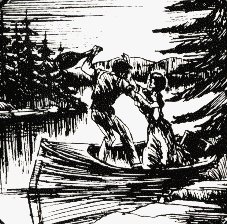
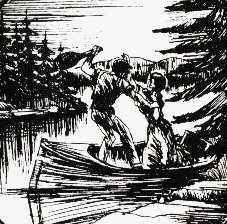
WHAT HAPPENED THEN REMAINS A MYSTERY TO THIS DAY. MANY SPECULATED THAT CHESTER ATTACKED GRACE IN THE BOAT WITH THE TENNIS RACKET, RENDERED HER UNCONSCIOUS, AND TOSSED HER INTO THE LAKE. DID THIS HAPPEN? DID HE ACCIDENTALLY KNOCK GRACE OUT OF THE BOAT AND MAKE NO ATTEMPT TO SAVE HER, AS THEODORE DREISER MAY HAVE IMPLIED IN HIS BOOK, "AN AMERICAN TRAGEDY?" OR DID GRACE, AS CHESTER SAID AS HIS DEFENSE, COMMIT SUICIDE BY THROWING HERSELF INTO THE LAKE?

NO MATTER WHAT HAPPENED. ONE THING WAS CLEAR. ONE PERSON WAS DEAD AT THE BOTTOM OF BIG MOOSE LAKE AND THE OTHER PERSON VANISHED WITHOUT A TRACE.

Thursday, April 06, 2006

4/6/06- Chester and Grace


On July 11, 1906, nearly 100 years ago, two young lovers on vacation at Big Moose Lake in the Adirondacks went out for a rowboat ride. Only one of them would return from that fateful trip, not realizing the impact of what happened that day would have on the world 100 years later. The events of that day spawned a classic novel by Theodore Dreiser called "An American Tragedy." It also spawned two movies, including the classic 1951 film "A Place in the Sun", the novel "A Northern Light" by Jennifer Donnelly, and most recently an opera in New York City. It also has kept people guessing as to what really happened that fateful day. And the names of the two lovers would forever be etched into New York Adirondack history.

The young man's name was Chester Gillette. The girl's name was Grace Brown. The girl would be the one who would never return, a victim of a tragic murder. She was survived by a series of heart-rendering love letters that she wrote to Chester because she was at least three months pregnant and she wanted him to marry her, but he would not. Grace assumed that she was in the Adirondacks on a wedding trip, but instead Chester had planned to kill her there. Later on, her letters were used to convict Chester at his trial and sent him to the electric chair in 1908. Even to this day, those letters still fascinate and touch the world.

This blog is dedicated to Grace's memory and since 2006 is the centennial year of that tragic day, I decided that it would be a good idea to start a blog site exclusively devoted to this immortal murder case an the events that are being planned to commemorate that fateful day. It will also focus my attempts to make sense of what may have happened on that July day in 1906, a day no one will ever forget.