Showing posts with label adirondacks. Show all posts

Wednesday, September 19, 2007

9/19/07- New Developments


So far there hasn't really been much going on in the world of Chester and Grace but I haven't really been idle as far as they go. As I continue to write the book, I have received some new documents that pertain to Grace from her grandnephew, Robert Williams on July 11 of this year. Among the new pieces of information is a detailed account of Grace's ancestry that dates back to the Mayflower. This information will be in my book, which at press time is called The Murder That Will Never Die: The Murder of Grace Brown. I am still hoping to get the book done and out by the end of the year.

On August 25, almost a year to the day that I went down to Cortland and South Otselic, I finally went up to Big Moose Lake for a day trip. I went on a tour boat ride and went out to the scene where Grace was murdered and it was really lovely up there. The road up to the Adirondacks appeared to be virtually unchanged from when Chester and Grace went up there by train 101 years earlier. I wrote an account of my trip on my other site. And just for the record, I did not see Grace's ghost up at the lake, even though there is a photo of her on this page. The photo of Grace's ghost comes from the famous Unsolved Mysteries episode from 1996.

I am still waiting on several pieces of information but otherwise, as far as the book goes I am in pretty good shape.

Thursday, May 24, 2007

5/24/07- Creating An American Tragedy

By 1923, author Theodore Dreiser was very hard at work on a novel that he hoped would become his crowning achievement. It was novel about a man who was torn between two women from completely different worlds and while in pursuit of the American Dream, he commits an unforgivable act. He was calling the book, based on the real-life murder of Grace Brown by Chester Gillette at Big Moose Lake in 1906, "An American Tragedy."

To prepare for his novel, Dreiser obtained a copy of the trial transcript; went on a road trip to view the sites where the story took place, including the murder scene at Big Moose Lake. He also viewed Grace's love letter, which by then were in the possession of the family of District Attorney George Ward, who died in the Spanish Flu Epidemic of 1918. He also went through some of the old New York City paper articles that dated back to the trial which he had saved.

In order to make the novel fictional, he basically changed whatever he could about the events and the locations of the original case. For starters, he changed the Gillette Skirt Factory into a shirt collar factory and he changed the city and the location from Cortland to an area of Central New York that he named "Lycurgus." On a map, it would be near the real-life factory town of Canajoharie. He also changed the name of all of the key players and places that figured into the Gillette story. For example: Big Moose Lake became known as Big Bittern Lake and it was located near the Canadian border. The town where Chester (or Clyde Griffiths as he is known in the novel) was tried in was changed from Herkimer to Bridgeburg and the county name was changed from Herkimer to Cataraqui County.

Dreiser even changed Chester's background a little bit by stating that Clyde originally hailed from Kansas City and most of the events that happened to Clyde in the first part of the novel were based more on Dreiser's upbringing rather than Chester's. However, Dreiser retained the excessively-religious environment that both Chester and Dreiser were brought up in. He also made Grace (renamed Roberta Alden in the book) into a poor farm girl from a poor, unkempt family farm, a far cry from the real Grace's family who were actually middle-class people and very well thought of. Then he turned Ward (renamed Orville Mason) into the main villain of the story, a district attorney who was a raving lunatic looking to send a man to the electric chair to serve his political ends. Ward, although he was elected Herkimer County Judge a week before Chester's trial started, was not like that.

And yet there were some things that Dreiser retained from the Gillette story. In the novel, he used Grace's letters almost word for word; he used Chester's final statement that was written before his execution in 1908 exactly word for word save for Clyde's signature at the end; he kept Auburn as the prison where Clyde was executed even though by the time the novel was published, state executions were only carried out at Sing Sing Prison in Ossining, NY; and using the city papers as a base, he created a love triangle with a rich girl. At the trial, the press made a big deal out of Chester's relationship with Harriet Benedict, the daughter of a prominent Cortland lawyer, even though the true nature of their relationship was strictly based on being merely friendly acquaintances.

It took Dreiser nearly two years to get his book ready for publication and by the end of 1925, he finally unveiled "An American Tragedy" to the world. It was written in three parts and it was well over 800 pages long, about the length of a Harry Potter book. Still the general public bought the book and it became a major sensation.

In Central New York, the novel's release put Chester and Grace back in the news again, especially in Herkimer County. Just prior to Dreiser's novel, the case had been all but forgotten and seemed on the verge of fading into local legend. After Dreiser's novel was released and even a few years afterward, people began to take Dreiser's word as gospel as to what actually happened at Big Moose Lake in 1906 and it would take years before the real story began to filter back to the surface.

But for now, Dreiser finally had his masterpiece and a famous murder case finally achieved legendary status.

Wednesday, May 02, 2007

5/2/07- Man With A Vision


In 1906, the Chester Gillette murder trial captured the imagination of people all across the nation. It was the topic of conversation among many people at that time to the point where the story of the young man who murdered his pregnant girlfriend in the Adirondacks overshadowed the other major murder trial that was occurring at the same time: The Harry Thaw case.

Among those who were entranced by the story was a 35-year-old novelist and magazine editor named Theodore Dreiser. He became interested in the case because he was looking for a certain type of crime that reflected the dark side of the pursuit of the American Dream to put into his next novel. He had researched dozens of murder cases before deciding that he was going to use the Gillette Case as the basis for the novel.

Dreiser was born in 1871 in Indiana. Like Chester, Dreiser came from an excessively- religious family and clearly had the same feelings for young women, especially upper-class women, that Chester had. He wrote many short stories before publishing his first novel "Sister Carrie" in 1900. It was pretty much a cutting-edge novel for its era and caused quite a bit of controversy because of the sexual content that was in its pages. It took years for the book to sell partly because of the changing attitudes of the era.

By 1920, after writing several other books, Dreiser was ready to create what was going to be his great masterpiece. He decided that he was going to base his novel on the Gillette case and he was going to call the novel "An American Tragedy." He viewed Chester as a "Horatio Alger gone wrong" character and realized that he and Chester shared a similar background which was essential in the creation of the main character, Clyde Griffiths.

In the novel, Clyde is forced to choose between his poor pregnant factory girlfriend, who was modeled after Chester's lover/victim Grace Brown, and a society girl, who was modeled after one of Chester's upper-class girlfriends, Harriet Benedict. In the book, Clyde planned to kill his poor girlfriend so he could marry his rich girlfriend. At the last minute, he chickened out and the poor girlfriend's death ended up being an accident and he simply did not save her. However, Clyde was still charged with murder and executed in the electric chair.

To prepare for his novel, Dreiser requested a copy of the trial transcript and researched clippings from the New York Sun, which was one of the "yellow journal" papers that covered the trial. Then in 1923, he and then-mistress Helen Richardson took a road trip to tour the sites that related to the case, including Grace's home in South Otselic; the sites in Cortland where Chester and Grace met and worked; Herkimer where the trial took place; and Big Moose Lake where the murder took place.

During their trip to Big Moose Lake, Dreiser and Helen rented a rowboat at the Glenmore Hotel where Chester and Grace also rented their boat and went out on the lake. When they approached the murder scene, Helen noticed that Dreiser had a strange look on his face and she suddenly became frightened. She had a feeling that Dreiser was going to kill her and put that in his book. However, at that moment, she realized that she had cast herself as Grace in that moment.

Also during their tour, they stopped off at the home of District Attorney George Ward, who lived in Dolgeville. Ward had died a few years earlier during the Spanish Flu Epidemic of 1918. His daughter allowed him to view Grace's letters which he kept after the trial and he later put the letters into his novel almost word for word.

When he returned from his tour, Dreiser began taking what he had learned about the case and molded it into what he hoped would be the greatest novel he ever wrote. It would be another two years before it would be published, but when it was published it would become one of the greatest classic novels of all time and it would turn the Gillette case into an immortal legend.

Saturday, July 15, 2006

7/15/06- In Loving Memory


It has been a very trying week with the memorial for Grace Brown happening this past Tuesday at Big Moose Lake in the Adirondacks. About 200 people witnessed the memorial wreath being placed in the lake that day, including descendants of Grace herself. Unfortunately, I was not one of them. Due to work commitments, I could not attend and I was very devastated about that. As I mentioned in my last blog, I made arrangements to have a dozen red roses sent up to the lake, along with a brief message to Grace.

In addition to posting my last entry, I spent that unhappy Tuesday thinking about Grace. I am not related to her in any way, but I certainly felt terrible about not being there. I found nearly every thought that I had that day to be about her. I could hardly get to sleep and I was so choked up. I have only been involved with Grace's story for a year as of this past Wednesday and I haven't really known about Grace that long, but I felt like I have lost someone very close to me.

In a way, I have but at the same time, I feel as though I gained one as well. It is as if Grace has become a permanent part of me.

Since then, I have been trying to take it easy as I go through the mourning process, which is why I haven't posted anything since that day. I have posted a brief memorial blog on my Yahoo 360 site, but other than that, I have been trying to take it easy as I go through this period.

I also watched news reports in connection with that day and I learned that Grace's relative did not know about his relation to her until the day he had to read Theodore Dreiser's novel, "An American Tragedy" in college. At first he told his father that the book was all right, but it wasn't until his father told him that the book was about his grandmother's sister (Grace) that he became interested in the book.

When he came to Big Moose that day, he brought with him several of Grace's personal effects, including her school-age diary, her baby cradle, and a lock of her hair.

Hopefully, Grace received my flowers and my message to her and hopefully the day will come when I will finally be able to go up to Big Moose and I will finally be able to pay my respects to the famous young writer from Chenango County who has captured not only the hearts of dozens of people all over the world but mine as well.

And now that the memorial is over, I can finally get back to the story of Chester Gillette's last days, but that will have to wait until sometime next week.

Tuesday, July 11, 2006

7/11/06- A Tragic Anniversary


Well, it's here at last. Today is officially the 100th anniversary of Grace Brown's tragic murder at Big Moose Lake at the the hands of her one-time lover, Chester Gillette, an event that historians have referred to as "The Murder That Will Never Die."

Today, thousands of people from all over the country will be at the site where Grace was killed. The events that they have planned include the unveiling of a historic marker at the site of the Glenmore Hotel where Chester and Grace embarked on their fatal rowboat ride, as well as a stamp cancellation where a stamp commemorating the murder's anniversary will be revealed. There will also be boat tours on the lake during the day following the route that Chester and Grace took in the rowboat. There will also be a book signing by Craig Brandon, the leading expert on the case and author of the books "Murder in the Adirondacks" and most recently, "Grace Brown's Love Letters."

The main event will happen in the afternoon when boats will gather at the site where Grace's body was found on July 12, 1906. The final letter will be recited and a memorial wreath will be placed in the lake by a descendant of Marjorie Carey, the woman who heard Grace's final scream. Descendants of the key players in the case will be in the boat, including Grace's descendants.

Sadly, I will not be up there due to work commitments that I could not get out of. That is why I am online here at the library instead of up there. However, I decided to make a last minute addition. I arranged to have a dozen red roses sent up to be put in the lake along with the wreath. I got this idea from her letters in which she stated that she loved red roses. The roses are basically to let Grace know that even though I could not be up there for her memorial, it will at least let her know that I haven't forgotten her.

When I delivered them to the Historical Society yesterday morning, I was told that by buying the roses, I had done the best thing possible for Grace. Even though I could not be up there, I may still have another chance to pay my respects to Grace in August when I go on the bus trip because one of the stops is to her grave in South Otselic. Then I was offered the suggestion that if I ever did go to Big Moose Lake that it would be best if I went alone so that it would be a private matter between myself and Grace. In some ways, I do think that it would be the best thing for me to do.

Tomorrow is another anniversary of sorts. Tomorrow is the one-year anniversary of the day I became involved with the Gillette Case when I stumbled upon that newspaper clipping. Since then I have learned enough via the books on the case and the Internet to launch this site. Also in the process, I found myself developing feelings for Grace, especially after receiving a copy of the final letter. It is like she has become a permanent part of me.

In closing, I would like to say one more thing. To Grace, wherever you are, I hope that you like the flowers that I sent up for you. May you continue to rest in peace.

Monday, May 15, 2006

5/15/06- The Hunt For Chester Gillette


In the late evening hours of July 11, 1906, a young man dressed in slightly damp attire entered the Arrowhead Hotel in the town of Inlet, which was located on Fourth Lake in the Adirondacks. When he registered for a room there, he signed the register as "Chester Gillette of Cortland, NY." He was shown to his room where he had something to eat and went to sleep.

Little did the people at the Arrowhead know that several hours earlier, Chester (under the assumed alias of "Carl Grahm of Albany) murdered his pregnant girlfriend Grace Brown in a secluded area of Big Moose Lake. By the time he got to the Arrowhead, Chester had only his suitcase. The tennis racket he had with him was gone. On the way to Eagle Bay, he buried the racket under a log near a group of trees along the road that connected Big Moose Lake with Eagle Bay.

Over the course of the next three days, Chester enjoyed the life of a normal Adirondack tourist, taking in the sights, going mountain climbing at nearby Black Bear Mountain, and going for canoe rides on Fourth Lake. He also had an appointment to keep with two girls that he knew from Cortland who were vacationing on Fourth Lake. Soon, he was reunited with Josephine Patrick and another girl, Gladys Westcott in a gift shop in Inlet. They were staying on Seventh Lake and Chester had made arrangements to meet them at their camp that Saturday.

And all that time, Chester was unaware of the fact that the law knew what happened to Grace and was rapidly closing in on him.

On Saturday morning (July 14) after a leisurely breakfast, Chester was shocked to see Albert Gross, his friend and co-worker at the Gillette Skirt Factory in Cortland in the hotel lobby. He was there in response to Chester's request for money that he sent three days earlier. With him were three men. Two of them worked for the Herkimer County Sheriff and the third man was a maverick Herkimer County District Attorney.

In greeting, Albert blurted out, "Chester, do you realize that Billy Brown has drowned?"

Chester seemed surprised to hear this and pretended that he didn't know about it. Then District Attorney George Ward started asking him questions and when he wasn't satisfied with Chester's answers, he ordered Undersheriff Austin Klock to arrest him.

Within hours, Chester was arrigned in the Old Forge Hotel for the first-degree murder of Grace Brown and was on a train bound for Herkimer, where his fate was to be decided by the grand jury.

For George Ward, the hunt for Chester Gillette was over and his crusade to send him to the electric chair had just begun.

Friday, May 05, 2006


5/5/06- BIG MOOSE LAKE


BY THE MORNING OF JULY 11, 1906, GRACE BROWN'S HOPE OF A WEDDING DURING HER VACATION IN THE ADIRONDACKS WITH CHESTER GILLETTE HAD DIMINISHED GREATLY. THE TRIP HAD NOT BEEN GOING WELL AT ALL. TENSIONS MOUNTED GREATER THAN EVER AS THE PREGNANT GIRL CONTINUED TO PUT PRESSURE ON CHESTER TO DO HIS DUTY AND MARRY HER, BUT CHESTER CONTINUED TO PUSH HER FURTHER AWAY.

THAT MORNING DURING BREAKFAST AT THE HOTEL IN TUPPER LAKE, CHESTER AND GRACE GOT INTO YET ANOTHER HEATED ARGUMENT ABOUT MARRIAGE AND GRACE BECAME SO HYSTERICAL THAT SHE HAD TO BE ESCORTED OUT BY A SYMPATHETIC WAITRESS. LATER ON, WITNESSES SAW THAT SHE WAS STILL CRYING WHEN SHE BOARDED A TRAIN WITH CHESTER THAT WAS BOUND FOR OLD FORGE, WITH A STOPOVER AT BIG MOOSE LAKE, WHICH WAS ON THE BORDER BETWEEN HERKIMER AND HAMILTON COUNTIES. BY THEN, GRACE HAD REACHED HER BREAKING POINT.

ON THE TRAIN LATER ON, GRACE MANAGED TO CALM DOWN ENOUGH TO WRITE A POSTCARD TO HER MOTHER BACK IN SOUTH OTSELIC SAYING THAT SHE "WAS HAVING A LOVELY TIME ON HER 'UNEXPECTED VACATION' IN THE ADIRONDACKS. " WHEN SHE HAD LEFT, HER FAMILY ASSUMED THAT SHE WAS RETURNING TO CORTLAND AND TO HER OLD JOB AT THE GILLETTE SKIRT FACTORY. IT WAS NOT LIKE GRACE TO LIE TO THEM THAT SHE WAS HAVING A GOOD TIME WHEN SHE REALLY WASN'T.

WHILE GRACE WAS WRITING HER POSTCARD, CHESTER WROTE A POSTCARD OF HIS OWN. THIS ONE WAS MORE OF A BUSINESS ARRANGEMENT THAN A SIMPLE POSTCARD STATING THAT SOMEONE WAS HAVING A GOOD TIME. HIS POSTCARD WAS TO THE SKIRT FACTORY AND IT SAID: "PLEASE SEND FIVE DOLLARS TO EAGLE BAY SO I CAN GET IT ON FRIDAY. CHESTER." IT WAS OBVIOUS THAT HE PLANNED TO BE THERE THAT DAY TO RECEIVE HIS MONEY. HE MAILED HIS POSTCARD ON THE TRAIN.

WHEN THE TRAIN GOT OFF AT BIG MOOSE STATION, CHESTER AND GRACE DISEMBARKED AND BEFORE GETTING INTO THE STAGECOACH THAT WOULD TAKE THEM TO THE GLENMORE, HE MAILED GRACE'S POSTCARD AT THE STATION. IT WAS CONSIDERED TO BE ANOTHER CLUE THAT HE WAS PLANNING MURDER.

AT THE GLENMORE HOTEL, HE USED THE ASSUMED NAME OF "CARL GRAHM" AND GAVE HIS ADDRESS AS ALBANY. THIS TIME, HE DID NOT PUT GRACE DOWN AS HIS WIFE. INSTEAD, HE USED HER REAL NAME AND HER ADDRESS AS A FORM OF QUICK IDENTIFICATION WHEN HER BODY WAS FOUND THE NEXT DAY WHEN HIS BODY WOULD NOT BE. HE WOULD BE LONG GONE BY THEN.

THEN HE ARRANGED FOR A ROWBOAT RIDE ON THE LAKE. FROM WHAT THE PROPRIETOR SAW, GRACE DID NOT LOOK TOO THRILLED ABOUT GOING OUT IN A ROWBOAT. AFTER ALL, SHE COULD NOT SWIM AND CHESTER KNEW THAT. HOWEVER, CHESTER GOT HIS WAY AGAIN AND GRACE WENT IN THERE WITH HIM. HE BROUGHT ALONG HIS SUITCASE, WHICH INCLUDED HIS TENNIS RACKET, WHICH SEEMED STRANGE TO THE PROPRIETOR. MOST OF THE PEOPLE WHO RENTED HIS BOATS DID NOT BRING THEIR SUITCASES WITH THEM ONTO THE BOATS.

THEY ROWED FOR HOURS, STOPPING OFF ON SHORE A FEW TIMES, ONE OF THEM FOR A PICNIC LUNCH. WHERE THEY HAD THEIR LUNCH WAS ALSO WHERE HE LEFT HIS SUITCASE. THEN SOMETIME AFTER SIX, A WOMAN FROM NEW JERSEY HEARD A SINGLE SCREAM FROM ACROSS THE LAKE. SHE COULD NOT SEE WHERE IT CAME FROM, BUT SHE KNEW THE SCREAM TO COME FROM A WOMAN.

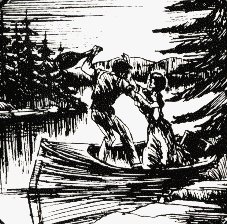
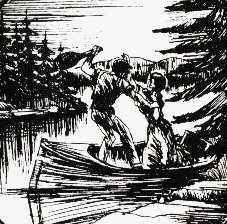
WHAT HAPPENED THEN REMAINS A MYSTERY TO THIS DAY. MANY SPECULATED THAT CHESTER ATTACKED GRACE IN THE BOAT WITH THE TENNIS RACKET, RENDERED HER UNCONSCIOUS, AND TOSSED HER INTO THE LAKE. DID THIS HAPPEN? DID HE ACCIDENTALLY KNOCK GRACE OUT OF THE BOAT AND MAKE NO ATTEMPT TO SAVE HER, AS THEODORE DREISER MAY HAVE IMPLIED IN HIS BOOK, "AN AMERICAN TRAGEDY?" OR DID GRACE, AS CHESTER SAID AS HIS DEFENSE, COMMIT SUICIDE BY THROWING HERSELF INTO THE LAKE?

NO MATTER WHAT HAPPENED. ONE THING WAS CLEAR. ONE PERSON WAS DEAD AT THE BOTTOM OF BIG MOOSE LAKE AND THE OTHER PERSON VANISHED WITHOUT A TRACE.

Thursday, May 04, 2006

5/4/06- Reunited

On the evening of July 8, 1906, a train from Cortland pulled into the station in the town of DeRuyter, New York. One of the passengers who disembarked from the train was a young man who was carrying a suitcase that contained a few articles of clothes, a Kodak camera, a tripod, and strapped to the front of his suitcase was a wooden tennis racket. It seemed apparent that he was going on vacation. After all, it was the summer season. However, Chester Gillette was not planning for a vacation.

He arrived in DeRuyter at the heartfelt urging of his sweetheart Grace Brown, who for the past three weeks had been trying to get him to come for her so that they could go away together on what she thought would be their wedding trip. However he was not planning to marry her. Instead, he was planning something much worse mainly because he wanted to continue his dalliances with the high society women of Cortland without fear of being hampered by her unplanned pregnancy.

His original plan when he got there was to hire a team of horses to drive to her home in South Otselic, over ten miles away. However, the proprietor did not have any horses that were rested enough for him to make the journey and it was also too dark for him to travel. There was also the fact that Grace was not at her family farm that night. She was staying overnight with a friend who lived in town before heading out to DeRuyter in the morning.

Instead, he went to the Tabor House, the hotel that Grace told him that she would meet him at, and registered under the assumed name "Charles George" and put down his address as New York City. He would use that alias again two nights later in Tupper Lake. That night marked the beginning of a pattern that Chester used throughout his trip while Grace was with him: A pattern that involved the use of assumed names that included his real initials, and this was established as evidence to indicate that Chester was planning to kill her.

Grace arrived at the Tabor House around 9:30 the next morning and in the parlor of the hotel, she was reunited with Chester for the first time in three weeks. They discussed their plans on where they would go and they agreed on the Adirondacks. They boarded the train that was going to Canastota in order to connect to trains that were headed for Utica and the Adirondacks.

They rode in separate cars to avoid suspicion. However on the ride to Canastota, Chester saw two girls from the group he hung out with in Cortland on the train. They were also on their way to the Adirondacks. Chester told the girls that he was on his way to Raquette Lake. He promised that he would meet them later on in the week.

That evening, Chester and Grace stayed at the Hotel Martin in Utica. Grace was really impressed with Uitca because it was the largest city she had ever seen. However Utica was no small potatoes to Chester, who lived in Chicago and San Francisco. At the hotel, he used the assumed name "Charles Gordon" and listed Grace as his wife. Then when they left the next day, they left without paying the bill, probably knowing that the blame would be placed on someone else. This was an act that would later come back to haunt him.

After a train ride through the Adirondacks that was filled with spectacular outdoor scenery, Chester and Grace arrived at their next stop: The town of Tupper Lake. Once there, he used the Charles George alias again and again he listed Grace as his wife.

However, tensions between Chester and Grace did not get any better in those two days they were together. And things were about to get a lot worse.

Thursday, April 06, 2006

4/6/06- Chester and Grace


On July 11, 1906, nearly 100 years ago, two young lovers on vacation at Big Moose Lake in the Adirondacks went out for a rowboat ride. Only one of them would return from that fateful trip, not realizing the impact of what happened that day would have on the world 100 years later. The events of that day spawned a classic novel by Theodore Dreiser called "An American Tragedy." It also spawned two movies, including the classic 1951 film "A Place in the Sun", the novel "A Northern Light" by Jennifer Donnelly, and most recently an opera in New York City. It also has kept people guessing as to what really happened that fateful day. And the names of the two lovers would forever be etched into New York Adirondack history.

The young man's name was Chester Gillette. The girl's name was Grace Brown. The girl would be the one who would never return, a victim of a tragic murder. She was survived by a series of heart-rendering love letters that she wrote to Chester because she was at least three months pregnant and she wanted him to marry her, but he would not. Grace assumed that she was in the Adirondacks on a wedding trip, but instead Chester had planned to kill her there. Later on, her letters were used to convict Chester at his trial and sent him to the electric chair in 1908. Even to this day, those letters still fascinate and touch the world.

This blog is dedicated to Grace's memory and since 2006 is the centennial year of that tragic day, I decided that it would be a good idea to start a blog site exclusively devoted to this immortal murder case an the events that are being planned to commemorate that fateful day. It will also focus my attempts to make sense of what may have happened on that July day in 1906, a day no one will ever forget.